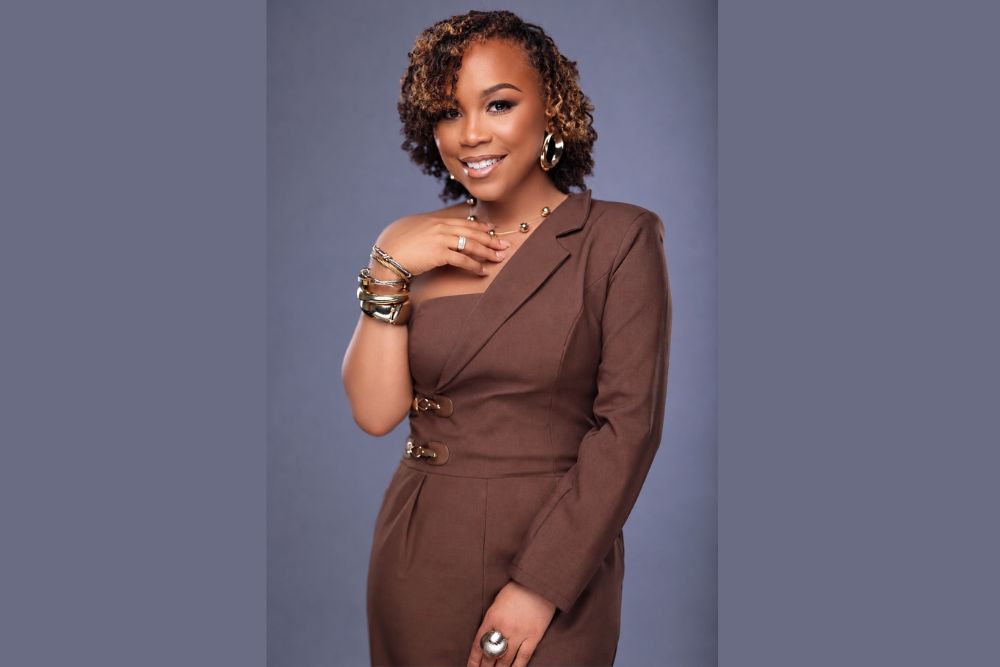
Tell us about yourself and what led you to become a writer and entrepreneur on Chicago’s South Side.
I am a writer, mother, mentor, and entrepreneur from the South Side of Chicago. For more than a decade I have been building and leading purpose-driven businesses that serve families and strengthen communities. Writing has always been a part of who I am, but this anthology represents the most personal and intentional thing I have ever put into the world. Everything I do is rooted in purpose, and this book is no different.
What made you create an anthology around grief rather than writing a solo book?
I created this anthology as someone who has walked through a variety of seasons of grief. I wanted to remind women that they are not alone. I wanted to empower women to understand that their experiences matter. I chose seven other dynamic women for this project, professionals, entrepreneurs, career women, who have also walked through the halls of grief. I wanted women to understand that they are seen and validated in their experiences. Everyone experiences grief, and I just wanted women to understand that there is another side of hurt. Healing can be found on the other side of grief.
How did you select the seven women who contributed to this book?
If I am honest with you, these seven women are my friends. I had an inside peek into their stories, but if I am even more honest, the details of their journeys with grief, some of them I was totally unaware of. They really came with it. There were some powerful testimonies of how healing can happen. I believe that every woman will find herself on the pages of this book. Some of the women are talking about unmet expectations and divorce. One contributor talks about losing her mother, her father, and her grandparents all within a span of a few years. Women will find themselves in these stories and be able to relate to the different things we as women have gone through.
Your book expands the definition of grief beyond death. What other forms of grief does the anthology explore?
The anthology explores disenfranchised grief, which is often the least discussed form because it is associated with shame and embarrassment. It is the grief connected to situations you feel you cannot talk about, betrayal, divorce, loss of a friendship. One contributor talks about grieving the version of herself that she no longer recognized. There are a variety of forms of grief explored in this book, and I think that is what makes it so relatable. Loss of any kind is painful, and these pages honor all of it.
Was there a personal loss or moment that sparked the creation of this book?
I have walked through a variety of seasons of grief, but I experienced something last year that caused me to process grief in a totally different way. In my previous seasons of grief, I did not know how to properly process what I was feeling. This time I was forced to do it differently. And I believe that once some people do that, there is a beautiful part of grief that you can experience. There is a right and a wrong way to process grief. Sometimes people reach for coping mechanisms, but what I have realized is that grief will always meet you at the end of whatever process you take. So why not process it the right way?
What do you want readers to feel when they finish the last page?
I want women to walk away empowered. I want them to understand that they are not alone in what they have experienced. Sometimes when we go through a certain type of loss, we feel like we are an anomaly, like why is this happening to us. But I wanted women to walk away feeling like what I experienced is experienced by other women, and there is another side of grief. This book does not end in despair. You will find prayers in the book, devotionals, a healing process and healing tools woven throughout the pages. I want women to understand that there is a process to healing and a way to heal where you will eventually see the beauty that can come from processing your grief.
How did the contributing authors process the vulnerability of sharing such personal stories publicly?
There were a lot of tears. As I was writing my chapters and the other women were writing theirs, some of them went back into spaces from 10 and 15 years prior. I really appreciate all the women for being extremely vulnerable. A lot of their process involved prayer. Many of us are in therapy, and that is extremely important when you are processing grief and loss. These women took the time to process their journeys in a way that was healing to their souls, not just their circumstances but also to their souls.
Grief can make us bitter or better. How do you personally navigate that choice?
I decided that although I experienced a certain type of loss, I did not want to stay in that place of feeling shame or feeling defeated. And that brings me to the title. Good grief is an oxymoron. Grief is hard and painful, but it is not always pointless. Most of the time it does not feel good when you are in the process, but it can bring about something good. I realized that God was able to heal me and transform me and I was able to find beautiful places as a result of that. I will never be the same, and most people are not the same after grief. But I believe that God has the ability to allow you to see the beautiful parts of your grieving process once you really learn from it.
What does the phrase beauty beneath the broken mean to you, and how does it tie the anthology together?
What I learned in my process was that God was able to heal me in that broken place. He was able to grow me and soften me. I found that to be true with all the other women as well. Some of them are talking about the loss of parents, and that pain does not necessarily go away, but they are able to process it better and sit with it better once they went through that grieving process. I believe that you can find beauty in the places you thought were broken. That is really at the heart of everything this book is trying to say.
What role does community play in healing, and how does this book create that space for readers?
Community is extremely important. For some people the very first instinct when grieving is to isolate, and I think that is common. But it is extremely important to have community, to have friends and church family, to have people who can pour into you when you cannot pour into yourself. For me it was important to find community, to find people I could talk to, to get a therapist, and to remain spiritually grounded. The book itself creates that space by letting women know they are not alone. When you read someone else’s story and recognize yourself in it, that is community.
What is the first step for someone who is in that difficult place of grief right now, and what can they expect at the live book experience on June 28th?
The first step is acceptance. Accepting whatever it was that caused the grief to occur in the very first place is crucial. Something my therapist and friends told me often is that you have to sit in it. Sitting in the pain rather than putting coping mechanisms on top of it or trying to avoid it is one of the most important things you can do. Because the grief is going to meet you at the end of that avoidance anyway. As for the live book experience on June 28th in Chicago’s South Loop, attendees will have the opportunity to meet all of the contributors in person. We will have a panel discussion where the contributors and I dive deep into our processes, moderated by a clinical psychologist. It is going to be a really elevated experience designed to inspire women who may be going through something right now. Good Grief: The Beauty Beneath The Broken is available at imtonie.com and on Amazon and Barnes and Noble.
Tonie Robinson is a writer, mother, mentor, and entrepreneur from the South Side of Chicago. Her anthology Good Grief: The Beauty Beneath The Broken is available now at iamtonie.com and on Amazon and Barnes and Noble. Robinson and all seven contributing authors will gather for a live book experience on June 28, 2026, in Chicago’s South Loop, moderated by a clinical psychologist.