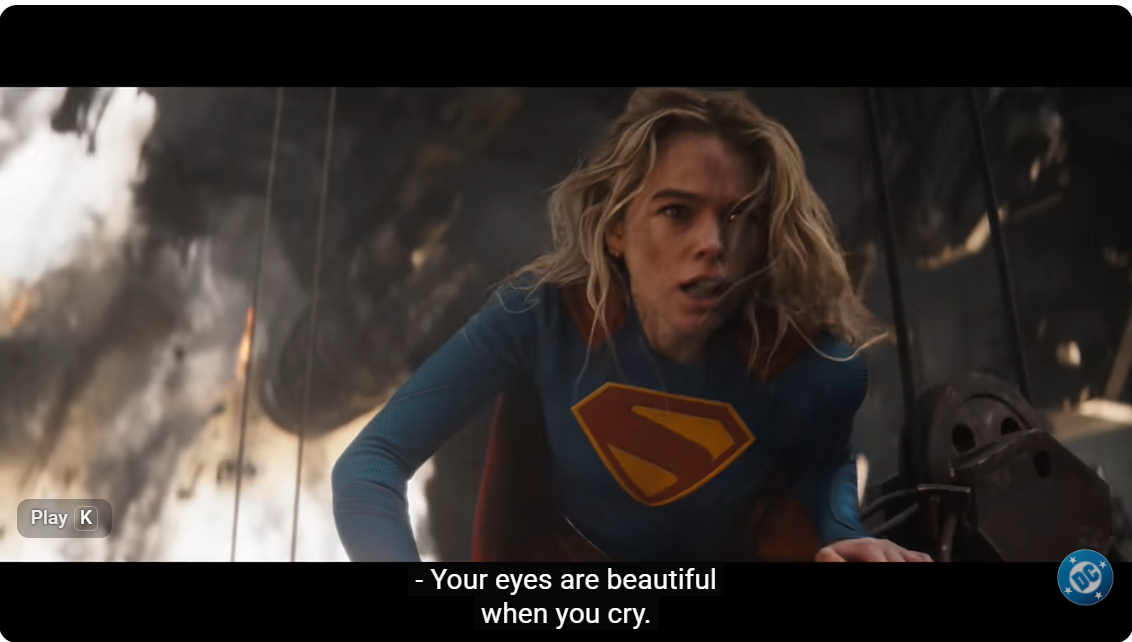
Milly Alcock carries the DC sequel on her back, but the film around her keeps getting in the way.
Supergirl, the second film in DC Studios’ relaunched cinematic universe, opened in theaters this weekend to reviews that broadly admired its lead performance while raising pointed concerns about nearly everything surrounding it. The film, directed by Craig Gillespie and written by Ana Nogueira, stars Milly Alcock as Kara Zor-El and enters a marketplace already dominated by Toy Story 5, which is projected to earn between $80 million and $90 million in its second weekend — well ahead of Supergirl‘s estimated opening of $47 million to $50 million.
What critics are saying about the film
The critical consensus landing around Supergirl is one of cautious appreciation undercut by structural frustration. Reviewers have largely praised Alcock’s performance, describing her portrayal of a cynical, trauma-carrying Supergirl as a departure from the character’s traditionally idealized image and the most compelling element of the film. The character as written draws directly from Tom King and Bilquis Evely’s 2021 comic series Supergirl: Woman of Tomorrow, which reimagines Kara as a 21-year-old survivor of Krypton’s destruction who has processed her grief very differently from her cousin.
Where critics have found fault is in the film’s action sequences, described as blurry and poorly tracked, and in the handling of Jason Momoa’s Lobo character, which several reviewers called an awkward fit that disrupts the film’s internal logic rather than enriching it. The screenplay has been called generally thoughtful in isolation, with the Lobo inclusion singled out as a concession to franchise-building at the expense of the story being told.
The comic that made the film possible
The source material behind Supergirl represents something unusual in the relationship between comics and Hollywood. King’s Supergirl: Woman of Tomorrow was published in 2021 and adapted into a major studio film within five years, a timeline that King himself described as almost without precedent in the industry.
The series grew out of King’s initial uncertainty about the character. He had previously written Superman and worried he would simply repeat himself with a version of the same hero. A conversation with fellow writer Steve Orlando reframed the assignment by reminding King of a canonical detail: unlike her cousin, Kara was a teenager on Krypton when it was destroyed. She remembered the planet. She knew what she had lost.
That distinction became the engine of the story. King has described processing that concept through the lens of his own experience, having been in Washington on September 11, 2001, and later spending nearly a decade working in the CIA’s counter-terrorism unit in Iraq and Afghanistan before leaving intelligence work to write comics full time. The themes of survival, moral ambiguity, and the weight of violence that run through his comics catalog are rooted in that biography.
The series ultimately cast Supergirl not as a mentor receiving wisdom but as the grizzled veteran passing it along to someone younger and more raw. That inversion, suggested by editor Brittany Holzer during development, is what King credits with unlocking the character for him.
Where the DC universe goes from here
Supergirl arrives as DC Studios continues building its restructured cinematic universe under James Gunn and Peter Safran. Last year’s Superman, starring David Corenswet, earned $618 million globally after opening to $125 million domestically, establishing enough momentum for the studio to continue expanding. Supergirl is a more modest commercial proposition by design, focused on a less universally recognized character with a smaller built-in audience.
King’s involvement in the broader DC universe extends beyond the source material for this film. He holds a creative partnership with DC Studios that gives him input across comics, gaming, and media properties. The animated series Mister Miracle, which he is showrunning for HBO, is in development. “Lanterns,” a live-action DC series he co-created with veteran screenwriter Damon Lindelof, is set to debut August 16.
Whether Supergirl performs well enough to anchor its own franchise remains an open question heading into its opening weekend. What is not in question is that Alcock’s performance has given the DC universe a character worth building around, even if the first film built around her has not yet given her the foundation she deserves.