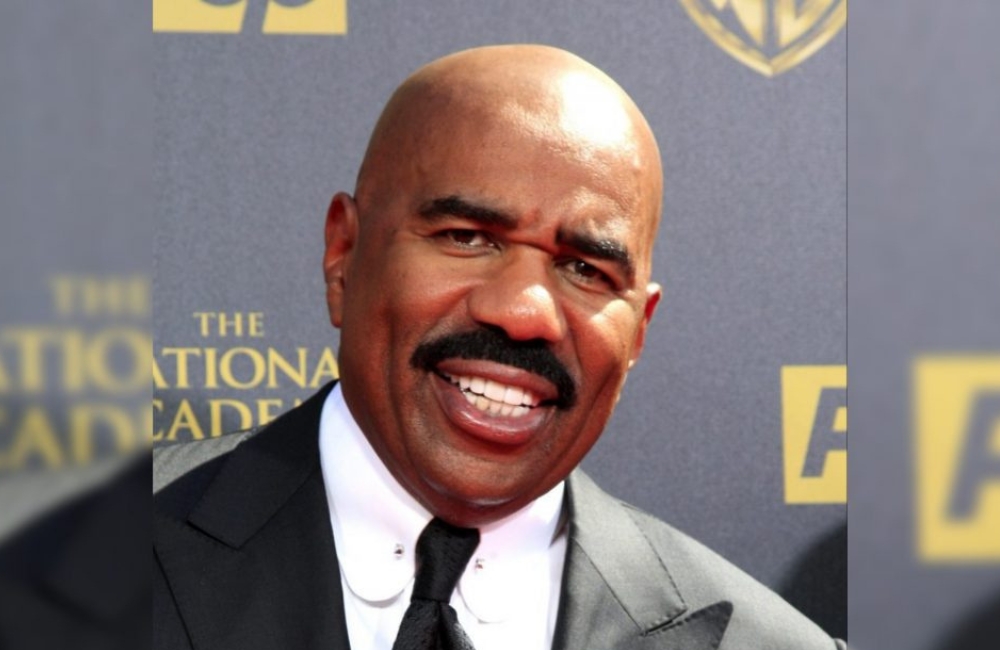
The comedian and television host says avoiding the celebrity social circuit is a deliberate choice
Steve Harvey does not go to parties. Not the white ones, not the themed ones, not the ones hosted by the biggest names in entertainment. The comedian and television host has made this a point of public emphasis, using a recent interview to explain a personal rule he says has become one of the defining decisions of his adult life.
The reasoning is straightforward. Harvey says that staying out of celebrity social spaces protects two things he values more than any industry relationship: his marriage and his reputation. In a business where visibility is currency and attendance at the right gatherings can translate into opportunities, Harvey has concluded that the cost is not worth paying.
What he said and why it matters
Harvey was direct in the interview, describing his absence from the celebrity party circuit as a deliberate policy rather than a scheduling issue. He made clear that the decision is not situational and does not depend on who is hosting or what the occasion is. His position is categorical: he goes home.
The reasoning he offered was partly practical. If he is not at a party, he cannot be photographed at one. If there is no photograph, there is no tabloid story, no speculative caption, and no conversation his wife has to navigate the following morning. Harvey framed this not as paranoia but as a simple calculation about how much unnecessary friction a person is willing to introduce into a marriage that is working.
That framing is significant because it treats the decision as preventive rather than reactive. Harvey is not describing a past incident that taught him a lesson. He is describing a framework he has built to avoid situations where the lesson would be necessary in the first place.
Marjorie Harvey and the value of transparency
Central to Harvey’s explanation is his relationship with his wife, Marjorie Harvey. He has spoken publicly about her before in terms that make clear she represents the priority against which most professional and social decisions get measured. In the interview, he described their dynamic as one in which she never has to track him down or wonder where he is. His whereabouts are not a mystery because he has removed the circumstances under which they could become one.
That level of deliberate transparency is unusual in an industry where the social calendar is often treated as an extension of professional life and where spousal concern about late nights and unfamiliar company is frequently normalized rather than addressed. Harvey’s approach treats his wife’s peace of mind as something worth actively protecting rather than something she simply has to manage on her own.
What this looks like in practice
The entertainment industry’s social circuit operates on presence and access. Parties, premieres, and gatherings are networking events with a dress code, and declining them consistently carries professional implications for most people who work in the space. Harvey’s ability to step back from that circuit without apparent cost to his career reflects both his level of establishment in the industry and a values structure that he has made public enough that the decision reads as consistent rather than antisocial.
He is not arguing that other people should replicate his choices or that celebrity gatherings are inherently problematic. He is describing what works for him in the specific context of a high-profile marriage that he has indicated he intends to protect.
A perspective worth taking seriously
What makes Harvey’s position more than a celebrity soundbite is that it describes a coherent framework for navigating the tension between professional visibility and personal stability. The default assumption in celebrity culture is that access and presence are always beneficial, and that a person who opts out of the social circuit is leaving something on the table. Harvey’s counter-argument is that what he is leaving on the table is worth leaving.
Whether his reasoning resonates depends entirely on what a person values and what they are trying to protect. For Harvey, the answer has been consistent and public for long enough that it appears to be something more than a talking point. He goes home. His wife does not have to wonder. And by his own account, that arrangement is working.