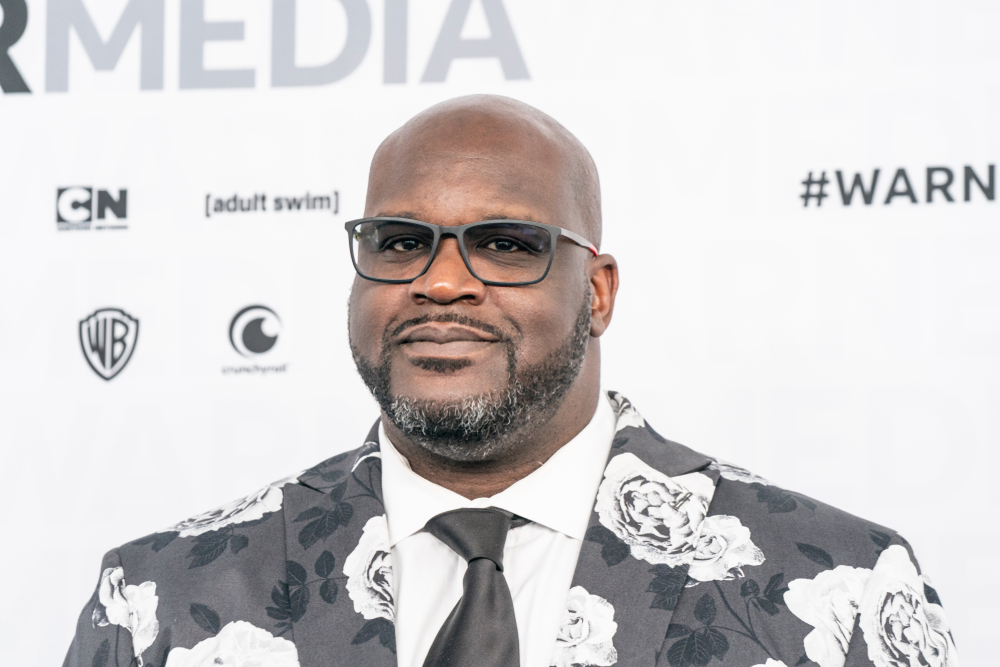
The four-time NBA champion has distanced himself from them entirely. Here’s why.
Shaquille O’Neal does not text any current or former NBA players. The decision is deliberate and his explanation for it is direct. He told the New York Post that he finds athletes and superstars difficult to be around and made clear that this view extends to celebrities broadly. About a decade ago, he made a conscious choice to stop identifying as one.
His reasoning is not complicated. He describes celebrity culture as producing a kind of strangeness that he wants no part of, and he draws a sharp line between that world and how he chooses to carry himself. When he visits New York for business, he arrives without an entourage, signs autographs, and treats people the way he would want to be treated. His stated goal is simply to be a regular person who happens to have had an unusual career.
The degrees most people do not believe he earned
O’Neal holds three academic degrees and is working on a fourth. He completed his bachelor’s degree at Louisiana State University after leaving after his junior year to enter the NBA draft, returning later to finish what he started. He went on to earn an MBA and a PhD in education from Barry University in Miami in 2012.
The doctorate was motivated in part by his children and the young people who followed his career. He was open about the fact that his financial success made the degree unnecessary from a career standpoint, but that was beside the point. He wanted to demonstrate that education mattered regardless of how much money someone had already made.
The reaction he gets most often is skepticism. People assume the PhD is honorary. He pushes back on that consistently, pointing out that he attended classes, wrote papers, and completed the same requirements as any other student. He is currently pursuing a master’s degree in liberal arts as his fourth credential.
What he thinks about athletes and money
O’Neal has strong opinions about the NIL era, the system that allows college athletes to earn money from their name, image, and likeness. His concern is not with athletes getting paid. It is with athletes prioritizing income before they understand how to manage it. He sees education as the necessary foundation and has made that argument consistently to his own children and publicly to younger athletes watching his path.
The argument is personal. O’Neal left LSU early for the NBA himself and has spent years making the case in retrospect that the education component matters even when the money arrives first.
Investing in people and places
O’Neal recently joined tm:rw, a tech superstore in Times Square, as an investor and partner. His approach to investing is not primarily driven by financial return. He looks for businesses and projects he believes in and that he thinks can improve people’s lives in practical ways.
His most personal investment is back in Newark, New Jersey, where he grew up. During a recent visit to New York he returned to his old neighborhood and has put money into two residential high-rise developments there valued together at more than $230 million. The motivation traces back to a visit with his mother years ago when she was visibly saddened by the state of a neighborhood she remembered differently. That moment became the foundation for a long-term commitment to the area.
What he keeps from his playing days
O’Neal played 19 seasons in the NBA, won four championships, and made 15 All-Star teams. His career generated plenty of memorabilia, but the pieces he values most come from his time with the late Kobe Bryant on the Los Angeles Lakers. He describes that partnership as the greatest one-two combination the sport has seen and keeps those items around as a reminder of what that era produced.
At 54, with a net worth of $500 million, three degrees, a fourth in progress, and significant real estate holdings, O’Neal has constructed a post-playing life that looks nothing like the celebrity world he stepped away from a decade ago. That appears to be exactly the point.