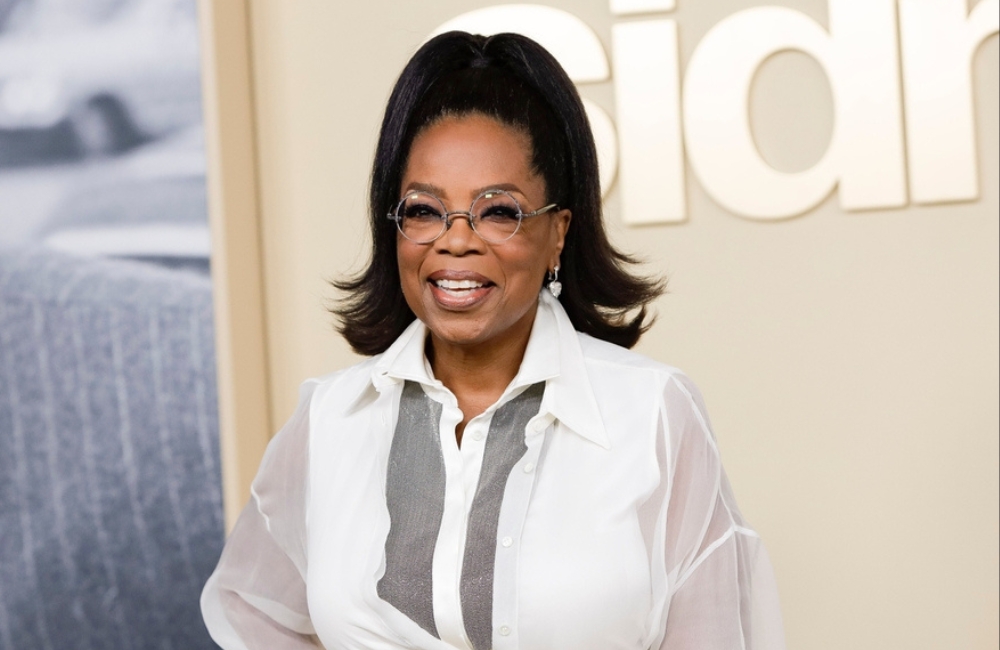
Winfrey pleaded with her audience to protect Houston at her most vulnerable moment.
Oprah Winfrey went to France last week and came home with an award and a confession. Speaking at the Cannes Lions International Festival of Creativity after receiving the event’s LionHeart Award, Winfrey disclosed for the first time that she once convinced an entire studio audience to bury a story about Whitney Houston falling off her stage during a performance on The Oprah Winfrey Show while struggling with addiction. More than a decade after Houston’s death, the images still have never surfaced.
The night Whitney fell
By the time Houston made what would become one of her final appearances on the show, she had relapsed after a period of sobriety. During a live performance in front of the studio audience, she fell from the stage. People in that audience had cameras. The moment was captured.
Winfrey said she grasped immediately what the spread of those images would mean for a woman already living under intense public pressure over her addiction. She described her reaction as one of urgency, and she acted on it directly. Winfrey turned to the audience and asked them, plainly and sincerely, not to release the photographs. She told them doing so would destroy Houston’s life.
The audience listened. Not one image has ever been published.
Oprah noted without hesitation that a room full of people making that same choice today would be nearly unthinkable. In a world where smartphones feed directly into social platforms, a fall like that would be shared and viewed by millions before the person had time to leave the building.
Oprah Winfrey reveals Whitney Houston once fell off the stage while performing on her show, but she asked the audience not to tell the media about it.
“I begged them not to put those pictures out, because it would ruin her life. And they did not.” pic.twitter.com/ATri84hsLn
— Variety (@Variety) June 23, 2026
A friendship built before the cameras rolled
Oprah provided context that made the moment feel even more layered. Years before that final visit, Houston had come to the show for an interview that Oprah described as one of the most meaningful of her career. Before filming began, the two women met backstage and had a candid conversation about what they each wanted the exchange to accomplish. Houston was sober that day, and the trust built in those few minutes behind the curtain carried into one of the most honest conversations either of them had given to television.
The later visit, defined by the fall and the cover-up that followed, was its mirror opposite.
Whether protecting Whitney was the right call
TMZ raised a question that has no clean answer. There is an argument that public exposure of the fall might have been exactly the kind of rock-bottom moment that could have forced Houston toward treatment and a genuine turning point. Winfrey’s act of protection, however compassionate, meant that particular reckoning never came. Houston died in February 2012 at the age of 48 after an accidental drowning.
The question of whether shielding someone in crisis protects them or enables them is one that doesn’t resolve neatly, and Winfrey did not present it as if it did.
A broader lesson about legacy
The Whitney Houston story was one part of a wider appearance at Cannes Lions in which Oprah urged creators, influencers and media figures to think beyond personal gain and visibility. She encouraged the room to recognize a larger obligation in whatever platform they hold.
She also reflected on the lesson that the late poet Maya Angelou pressed on her after Winfrey began to believe a school she had built in South Africa would stand as her defining contribution to the world. Angelou challenged that framing, telling her that a legacy is not a single thing but the accumulated weight of every life touched along the way.
What Winfrey chose to do for Houston that afternoon in a television studio, and what an audience chose to honor, is one thread in that weight.
SOURCES: TMZ, EURweb