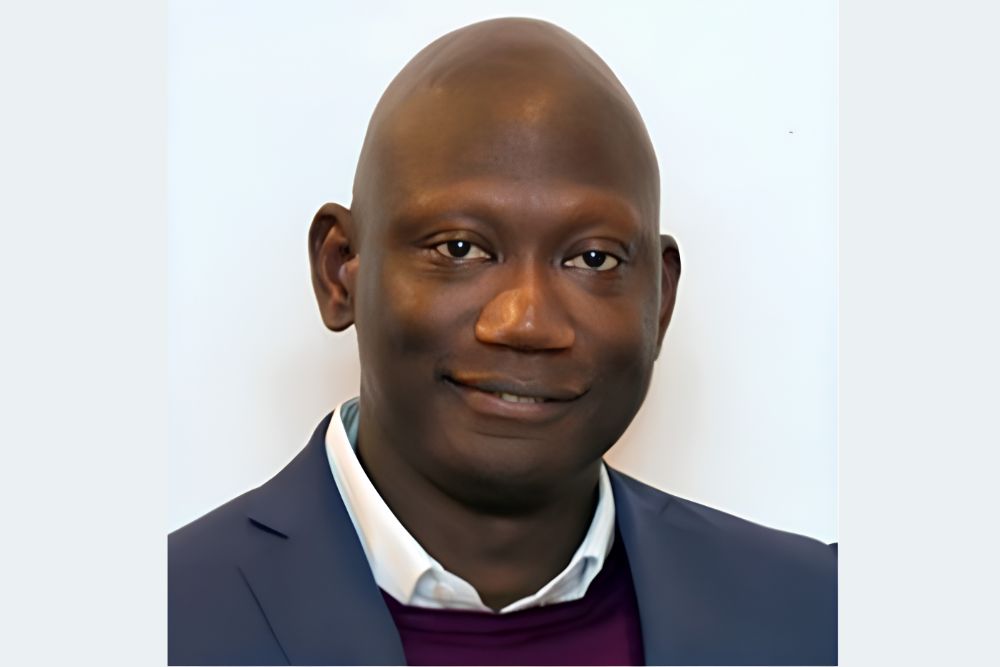
Dr. Olumide Gbolahan on new treatments and closing cancer trial gaps
Dr. Olumide Gbolahan has spent his career treating some of the most difficult cancers to catch early, including pancreatic cancer, a disease often diagnosed too late for surgery. He said a recent scientific breakthrough is changing what is possible for patients who once had few options.
“About 90% of pancreatic cancers are driven by a mutation called RAS, which was historically considered undruggable,” Gbolahan said. “That has changed. A new generation of RAS-targeting drugs is now in development and already in trials.”
Gbolahan said the shift represents one of the most significant developments in pancreatic cancer research in years, offering a path forward for a cancer that has long resisted meaningful treatment advances.
Immunotherapy already changing outcomes
Gbolahan pointed to immune checkpoint inhibitor therapy as another major advancement reshaping cancer care more broadly. The treatment works by releasing the brakes cancer cells use to hide from the immune system.
“These drugs are now approved for multiple cancer types and have genuinely changed outcomes for many patients,” Gbolahan said.
Gbolahan said the pace of progress across multiple cancer types gives him genuine optimism for patients being diagnosed today, particularly as newer therapies move from research settings into standard treatment protocols.
Why clinical trials matter for Black patients
Gbolahan said access to breakthrough treatments almost always begins with clinical trial participation, a process that has historically underrepresented Black and minority patients.
“A clinical trial is the process by which every treatment currently available was proven to work,” Gbolahan said.
He explained that trials move through distinct phases, each answering a different question about a new drug’s safety and effectiveness.
“Phase 1 establishes that a drug is safe in humans and identifies a tolerable dose,” Gbolahan said. “Phase 2 tests whether the drug actually shrinks tumors in a meaningful way. Phase 3 asks whether the drug helps patients live longer compared to the current standard of care.”
Gbolahan said most patients enrolled in trials at Grady Memorial Hospital receive the current standard of care at minimum, with experimental arms adding the new treatment being studied rather than replacing existing care.
Rebuilding trust one relationship at a time
Gbolahan acknowledged the deep hesitation many Black patients feel toward clinical trial participation, rooted in a documented history of medical mistreatment. He said the answer is not to push harder but to engage more honestly.
“The response is not to push harder but to engage more honestly, work with community partners, and treat patients as partners in their own care,” Gbolahan said.
Gbolahan said Grady’s longstanding relationship with the Atlanta community gives the hospital a unique foundation for that kind of engagement, one built over years rather than a single conversation.
“The community is more open than it sometimes gets credit for, and that openness deserves to be met with transparency and respect,” Gbolahan said.
A hopeful outlook for the years ahead
Gbolahan said the next several years should bring continued progress across the cancers he treats most, particularly pancreatic cancer, which has historically lacked effective screening or treatment options for average-risk individuals.
“The landscape for pancreatic cancer treatment is changing, and the next three to five years should bring further progress,” Gbolahan said.
Gbolahan said expanding trial access for underserved patients remains central to ensuring that breakthroughs reach the communities that need them most, rather than benefiting only those with existing access to major research institutions.