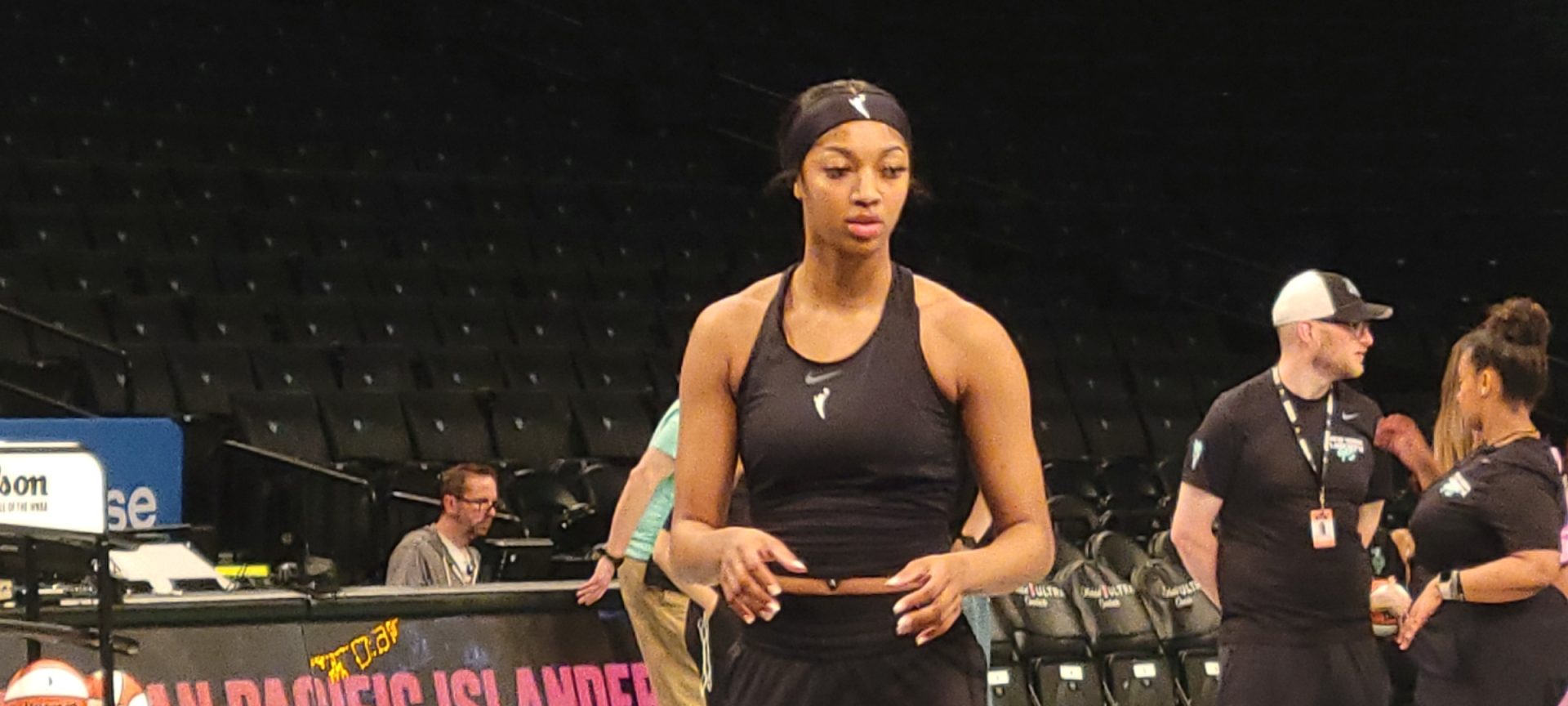
The Atlanta Dream forward’s emotional response to “Lift Every Voice and Sing” sparked backlash — but she’s not backing down.
Angel Reese and the Anthem That Divided a Crowd
The night before Juneteenth, inside Gainbridge Fieldhouse in Indianapolis, Angel Reese did something that would follow her well beyond the final buzzer. As “Lift Every Voice and Sing” — the Black National Anthem — filled the arena ahead of the Atlanta Dream’s game against the Indiana Fever, the third-year WNBA forward sang along loudly, visibly moved by the moment.
For some fans in attendance, it was too much. Reese was met with audible boos from a portion of the Fever crowd — a reaction that carried through much of the game. But if the criticism was meant to quiet her, it had the opposite effect.
Reese Defends Her Juneteenth Moment
Speaking to reporters the day after the Thursday night game, Reese didn’t walk anything back. She described being overwhelmed by a surge of emotion — shaped by everything she had navigated since entering the national spotlight. The booing, she said, only made the anthem hit harder. When she heard “Lift Every Voice,” she felt the weight of those who had come before her, who had marched and struggled so that she could be exactly where she was: a professional athlete, competing at the highest level, on the eve of a federal holiday marking the end of American slavery.
It wasn’t a performance. It was personal.
A Career Built Under a Microscope
Reese has never been a quiet presence. Since her breakout with the LSU Tigers — where she helped the program win a national championship — and before that at the University of Maryland, she has operated in a space where her every move is dissected. Critics and supporters have both followed her closely into the WNBA, where she now plays for Atlanta after her time with the Chicago Sky.
The attention hasn’t always been kind. She acknowledged that the past couple of years have included difficult stretches — moments when public scrutiny was relentless and unforgiving. But she framed those hardships not as wounds, but as fuel.
Representation as Resistance
For Reese, the anthem moment wasn’t just about herself. It was a message — directed at every young Black girl or boy who might be watching, looking for someone who looked like them thriving unapologetically on a big stage.
She has been deliberate about using her visibility as currency. In her view, representation isn’t a buzzword — it’s a responsibility. Standing up, singing loudly, refusing to shrink when a crowd turns hostile: all of it, she suggested, is part of the same commitment. She has a platform, and she intends to use it.
The Bigger Picture for the WNBA
Reese‘s anthem moment unfolded against a backdrop that gives it additional weight. The WNBA has seen a surge in cultural relevance over the past two seasons, driven in large part by the Reese-Clark rivalry, which has generated the kind of sustained media attention the league hadn’t experienced in years. Their matchups consistently rank among the most-watched games of any given week.
That visibility cuts both ways. It means bigger audiences — but also louder detractors, and a much shorter grace period for any moment that can be packaged as controversy. Reese has navigated that tension throughout her career, and Thursday night was simply the latest chapter.
She doesn’t appear to be losing sleep over it.
Source: The Spun