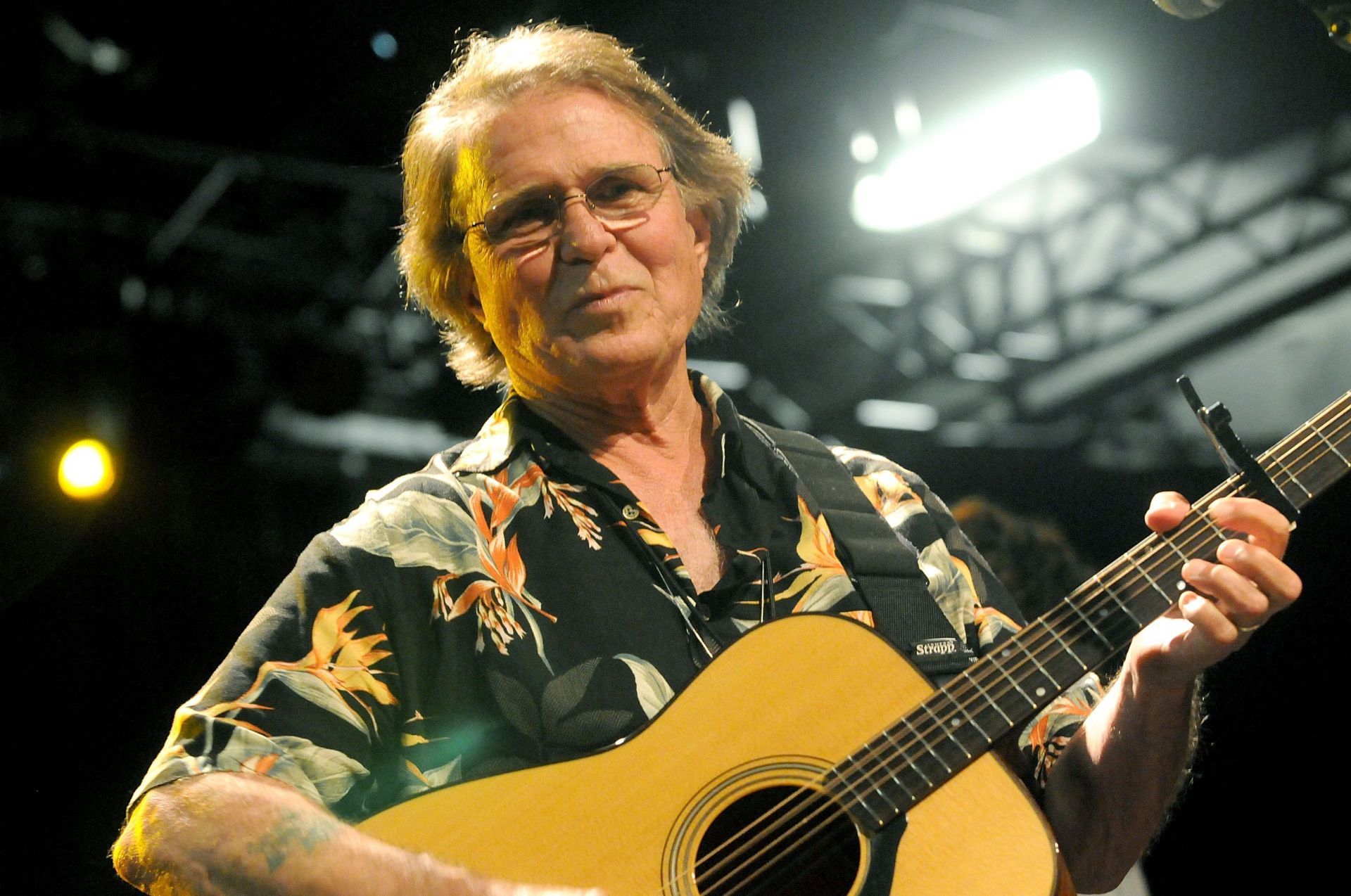

American singer, songwriter, and film composer Country Joe McDonald, whose real name was Joseph Allen McDonald, died from Parkinson’s disease-related complications in Berkeley, California, on March 7. He was 84.
Country Joe was best known as the co-founder and frontman of the former psychedelic rock band Country Joe and the Fish. The group announced the death via social media on Sunday, adding the remaining members were “deeply saddened” by the news. The statement added that McDonald was “surrounded by his family” at the time of his passing.
For those unaware, the band split in 1970 after Country Joe McDonald left to pursue a solo career.
Since then, they have been occasionally reuniting. For instance, in 1977, they came together to release the sixth studio album, Reunion. Likewise, the members returned in 2004 (except drummer Gary “Chicken” Hirsh) as the Country Joe Band and made music for the next two years, including the single Cakewalk to Baghdad and the live album Live in Berkeley.
To this day, former members of Country Joe and the Fish continue to tour together on several occasions.
Country Joe McDonald was preceded in death by two of his ex-bandmates. Hirsh died in August 2021, aged 81. Meanwhile, bassist Bruce Barthol passed away in February 2023, at the age of 75.
All you need to know about Country Joe McDonald’s band split
Country Joe McDonald and Barry “The Fish” Melton formed Country Joe and the Fish in Berkeley, California, in 1965, influenced by the rising psychedelic scene in San Francisco alongside counterculture, anti-war protests, civil rights movement, and the remnants of free love and free speech.
According to Concord, the band was formed after Country Joe McDonald ran out of material for his magazine Rag Baby and shifted his focus on creating an extended play. By then, he was already working with Melton, vocalist Mike Beardslee, washboardist Carl Schrager, bassist Richard Saunders, and folk singer Peter Krug.
Finally, the EP came out later that year, with two hit songs, the 60s anthem I Feel Like I’m Fixin’ to Die Rag and Country Joe’s satirical single, Superbird.
Following the success of the EP, McDonald and Melton formed the folk duo Country Joe and the Fish, named by their manager ED Denson. However, they soon adapted to the growing rock band scene and welcomed new members, including bassist-percussionist Paul Armstrong, guitarist-keyboardist David Cohen, bassist Bruce Barthol, and drummer John Francis Gunning.
Country Joe and the Fish gained popularity through their frequent gigs at The Jabberwock coffee house in Berkeley and the San Francisco-based ballrooms, the Avalon and the Fillmore Auditorium. Soon, they released the extended play White EP, comprising the hit songs Bass Strings.
Meanwhile, Armstrong left to focus on a two-year alternative service, as did Gunning. The latter was replaced by Hirsh.
In 1966, the band signed a contract with Vanguard Records and released the debut studio album Electric Music for the Mind & Body, which comprised Masked Marauder and Not So Sweet Martha Lorraine. It was followed by the album, I Feel Like I’m Fixin’ to Die, led by Country Joe McDonald’s most popular single, Fixin’ to Die Rag. Both albums found their places in the top 50 of the Billboard charts for a year.
Around the same time, Country Joe and the Fish performed at the Monterey Pop Festival and turned heads with their appearance in the film Revolution. By 1968, the band released its third album, Together, while touring worldwide.
Midway through the recording of the 1969 LP, Here We Are Again, three members exited the band, including Barthol, Cohen, and Hirsh. They were replaced by bassists Mark Ryan, Peter Albin (of Big Brother and the Holding Company), and Jack Casady (of the Jefferson Airplane).
David Getz and Mark Kapner, the drummer and keyboardist of Big Brother and the Holding Company, respectively, also joined the lineup of Country Joe and the Fish.
In 1968, when Hirsh was still around, the band sparked a controversy after he urged the audience to spell out “F**K” during their performance at the Shaefer Summer Festival in Wollman Rink, Central Park, New York City. This reportedly led to the cancellation of their already scheduled Christmas gig on the Ed Sullivan Show. However, they were allegedly asked to keep the deposit money.
The following summer, Country Joe McDonald returned to the Woodstock Festival without his band. His bandmates couldn’t make it because of the bad weather. He went on stage alone after Richie Havens’ set. During the performance, when he asked the audience to “Gimme an F!” in response to the lyrics in his The F-I-S-H Cheer, they again spelt out “F**K” instead of the original “FISH.” This was later included in the 1970 film, Woodstock.
Around this time, Country Joe and the Fish released the final LP, C.J. Fish, with new members Mark Kapner, bassist Doug Metzler, and drummer Greg Dewey. The lineup also appeared in the underground film, Zachariah.
Despite their ongoing fame and success, with Fixing to Die Rag becoming an anti-war/ youth anthem, McDonald embarked on a solo career, and Melton followed thereafter. In the absence of the two founding members, Country Joe and the Fish stopped touring and recording and eventually ended up disbanding.
Following his exit, Country Joe McDonald recorded covers by his songwriting hero Woody Guthrie, famously testified at the Chicago Seven trial, and worked with Vietnam War veterans. He also recorded over 30 solo albums and numerous singles, based on themes of sociopolitical justice and environmental causes. McDonald also scored music for TV and movie projects.
The artist worked until his health deteriorated in the late 2010s. Now, in his death, Country Joe McDonald is survived by his wife of 43 years, Kathy, his four children, Seven, Devin, Tara, and Emily, and four grandchildren.
Edited by Pallavi K