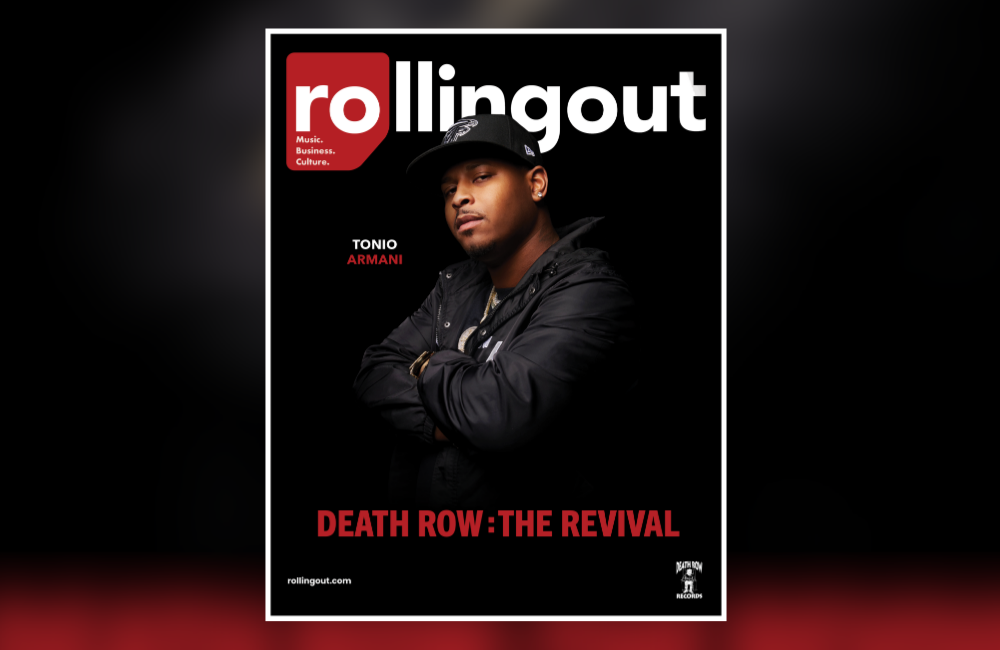
Who are you outside of the music — and how does that show up in your sound?
I’m a family guy. I’m the everyday dad and working man. You can hear it in my music because I talk about putting the work in and getting something out of it. My music comes from my experiences whether it’s what I’ve seen, where I’ve been, what I feel, or what I’ve gone through.
What does your voice represent that’s missing in music right now?
A grown man’s sound. That Gerald Lavert, that raspy growl. The greats like Barry White, Ray Charles, and James Brown’s full tones that’s making a comeback.
Death Row is historically a Los Angeles rap label. You’re not from LA — how do you represent your city while still embodying Death Row?
I rep Death Row wherever I go. I’m building the bridge between the west and the east, and the north with the south.
How do you define yourself within the genre?
I define myself as the King of Urban . It’s a blend or gumbo of , blues, country, and gospel.
When you hear “Death Row Records,” what does that name mean to you personally?
It means legacy, history, and now transformation. Because it is changing and expanding far beyond the artists and genres it used to represent.
What’s the first emotion you felt when you realized you were now part of that legacy?
It’s unbelievable. I finally felt a part of something. Like I became part of a team. I felt welcomed and accepted as family and I was deeply grateful.
Do you feel pressure carrying a name that helped define hip-hop — or does it fuel you? How?
I do. I feel the weight of my city and my genre on my soldiers because I aspire to be one of the greats. So I take this opportunity seriously. I want to show DeathRow ain’t a gang, it’s a family.
What have you studied (or unlearned) from the original era of Death Row?
I studied the history and how they got started. I also like the style of Nate Dogg and have always been inspired by his voice and approach to music.

This cover is a reimagining of one of the most iconic moments in hip-hop — what does it mean to stand in that exact position today?
I’m honored to be a part of the DeathRow legacy.
The original cover represented dominance and disruption — what does this version represent?
I would say that it represents the Rebranding and Growth of a musical Dynasty. It now has multiple genres with deepened ties to the genius of the legendary Snoop Dogg.
What are you saying to the culture by recreating — not copying — this moment?
I think we are saying music makes us family. DeathRow looks like me and you.
If the original cover was about power… what is this cover about? Evolution? Ownership? Healing?
I think it means Growth, in every sense of the word.
What makes this roster different from any other label lineup in music right now?
I think our roster is different because every artist has the freedom to be and create what’s authentic to them. We are not being changed or put into a mold to sell. It sells because the people connect to our truths and they feel what they hear.
How do each of your individual sounds come together to define the new Death Row?
DeathRow has a now. The in our voices and in our music is what connects us as family and what connects us to the people.
Five years from now, what do you want people to say about this era of Death Row?
I hope that in five years, this will be marked as a turning point in the history of something bigger and better for DeathRow and the world
You represent the new generation — what does it mean to redefine Death Row in this Era?
It really feels like alignment, because I came from rap originally, but I needed to transcend to something different for me, my family, my fans, and my faith.
Your presence feels intentional — what separates you from others coming up right now?
My originality. I don’t sound like anybody else and I don’t chase trends. Me being true to myself is what creates new trends.