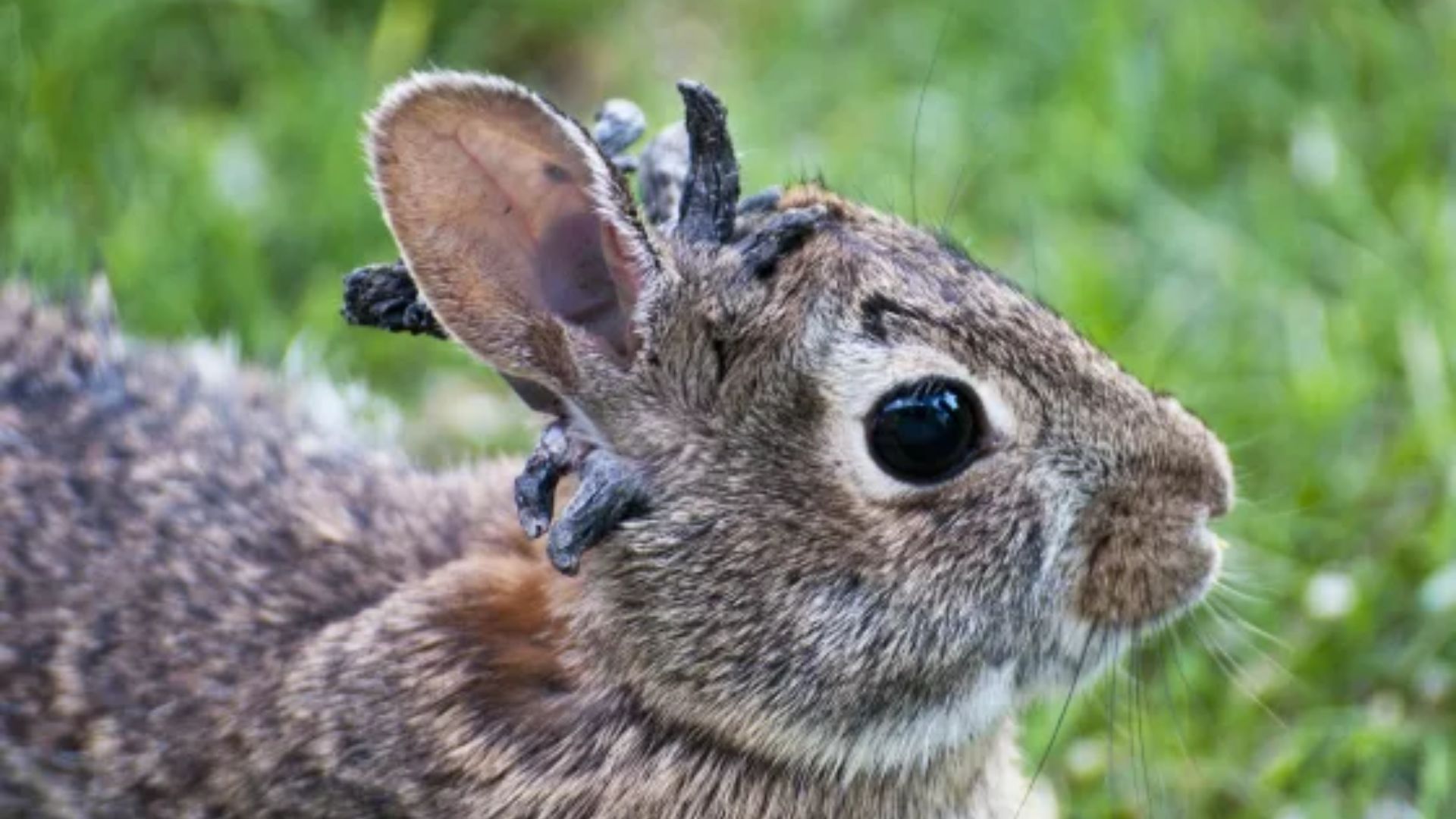

Recent news about “tentacled Frankenstein rabbits” may sound like a plot from a cheap horror film, but the news reveals a real disease found in wild animals. Citizens in Colorado and Minnesota had shared photos and videos of cottontail rabbits with dark, twisted growths looking like horns or tentacles on their heads.
Social media users named them “zombie rabbits” or “tentacled Frankenstein rabbits.” According to the wildlife experts, the growths come from a long-known infection that naturally affects rabbits. This condition, also known as the Shope papilloma virus, causes harmful tumors to develop, mainly on their heads.
This virus has important value in both medicine and folklore. It guides researchers to understand human papillomavirus and aids them in inventing the HPV vaccine. Wildlife professionals advise people not to touch or trap these rabbits because stress can easily kill them.
Continue reading more about the story.
Why are people calling cottontail rabbits tentacled Frankenstein rabbits? Details explored
The Shope Papilloma virus can also be abbreviated as SPV or CRPV. This papillomavirus infects rabbits and hares and causes cancer-looking horns, usually near the head. These growths can spread to other parts of the body or grow so large that the animals can’t eat and later starve to death.
Richard E. Shope studied these horn-like tumors and identified the virus in 1993, marking a major step in cancer virus research. The virus was first found in cottontail rabbits in the Midwestern United States. It can also infect brush rabbits, black-tailed jackrabbits, European rabbits, snowshoe hares, and domestic rabbits.
Scientists still lack clear data about the life cycle of papillomavirus. Research has now fully shown which genetic regions are active before or after viral DNA replication.
Should you be worried about tentacled Frankenstein rabbits?
You shouldn’t be worried about tentacled Frankenstein rabbits unless you are a domestic rabbit owner.
SPV only affects rabbits because there are no reports of the virus spreading to humans, dogs, or cats. In wild cottontails, the illness is usually mild because their immune system controls the infection, and the growth falls off naturally after a few months.
Severe cases can be deadly when the hard lumps form near the mouth or eye, blocking eating or vision. SPV hits much harder on domestic rabbits as these benign warts have a roughly 75% chance of mutating into malignant, cancerous tumors.
The virus spreads mainly through insect bites from mosquitoes, ticks, and fleas instead of direct contact between rabbits. Sightings increase during the summer and autumn because insect numbers rise sharply in the summer. Pet owners can protect rabbits by keeping them indoors or in screened areas that block biting insects.
Follow Soap Central for more updates on entertainment.
Edited by Aratrika Baidya