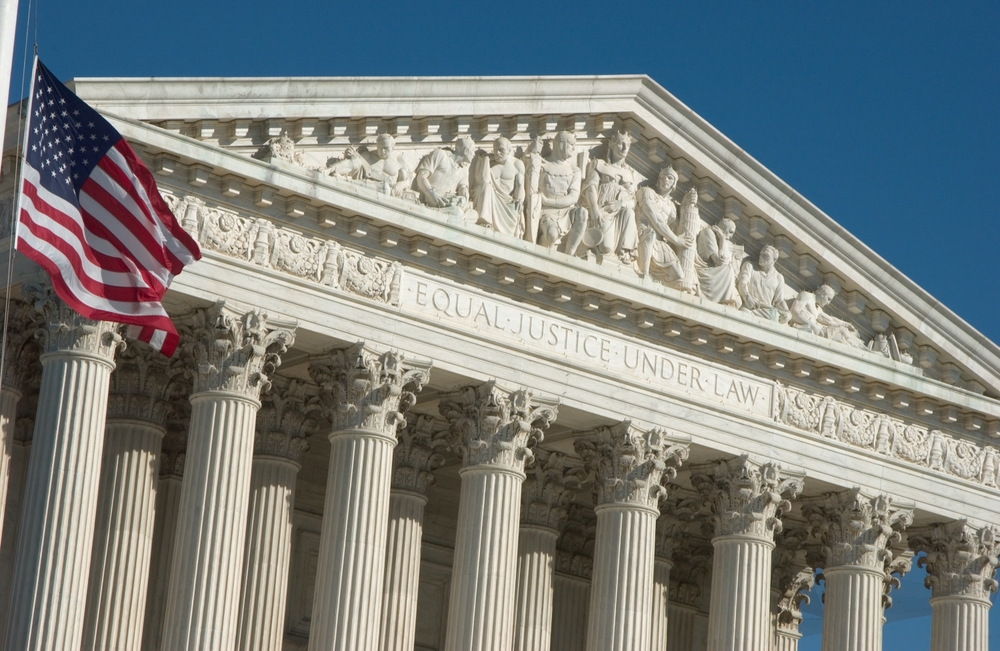
The Supreme Court delivered a significant rebuke to one of President Donald Trump’s most sweeping immigration policies today, upholding a long-standing interpretation of the Constitution that grants citizenship to nearly everyone born within U.S. borders.
The justices rejected Trump’s executive order, which sought to deny citizenship to children born in the United States to parents who are in the country illegally or on a temporary basis. The decision relied on a well-established reading of the 14th Amendment, ratified after the Civil War, along with subsequent federal laws affirming that birth on American soil generally confers citizenship, with only narrow exceptions.
A divided court reaches its decision
The ruling did not come unanimously. The majority opinion drew on historical understanding of the 14th Amendment’s Citizenship Clause and congressional debate surrounding its adoption, concluding that the constitutional guarantee extends broadly to nearly every child born within the country.
Three conservative justices dissented, arguing that the majority’s interpretation stretched the amendment beyond what its original framers intended. The dissenting opinion, considerably longer than the majority’s, argued that the protection was designed specifically to secure rights for formerly enslaved Black Americans following the Civil War rather than to serve as a broader, modern-day policy tool.
How the case reached the nation’s highest court
Trump signed the birthright citizenship order on the first day of his second term as part of a sweeping immigration crackdown. The policy never took effect anywhere in the country, as several lower courts moved quickly to block it. The case the Supreme Court ultimately ruled on stemmed from an appeal of a New Hampshire district court decision that had struck down the restrictions.
During oral arguments in April, justices across the court’s ideological spectrum reportedly raised pointed questions about the legality of Trump’s order, a session made more notable by Trump’s own attendance, an unusual move for a sitting president.
Lower courts that previously ruled against the order pointed to the Supreme Court’s 1898 decision in United States v. Wong Kim Ark, a landmark case that established citizenship for a child born in the U.S. to Chinese immigrant parents. The Trump administration had argued that children of noncitizens are not fully subject to U.S. jurisdiction and therefore should not automatically receive citizenship, a position the courts have now repeatedly rejected.
BREAKING: The Supreme Court upholds birthright citizenship, rejecting Trump’s proposed limits.
— The Associated Press (@AP) June 30, 2026
What the 14th Amendment actually says
The Citizenship Clause states that all people born or naturalized in the United States, and subject to its jurisdiction, are citizens of the country and of the state where they reside. While the amendment was adopted specifically to guarantee citizenship for Black Americans, including those who had been enslaved, its text was written in broader terms that courts have consistently interpreted as covering nearly all U.S.-born children, excluding only the offspring of foreign diplomats and members of an occupying foreign force.
Trump’s order would have marked a dramatic departure from that interpretation, and its scope extended well beyond the undocumented immigrant population he has frequently targeted in his rhetoric. The restrictions, had they taken effect, would also have applied to children born to parents legally present in the country on a temporary basis, including international students and green card applicants.
The stakes behind today’s ruling
According to research from the Migration Policy Institute and Pennsylvania State University’s Population Research Institute, more than 250,000 babies born in the United States each year would have been affected by the policy. That scale underscores why the case became one of the most closely watched legal challenges of Trump’s second term.
This marks the second major setback for Trump’s use of expansive executive authority before the Supreme Court. Earlier this year, the justices struck down a separate set of global tariffs Trump had imposed using an emergency powers law that had never previously been applied that way. Trump publicly criticized the justices following that ruling, a pattern of personal criticism he has repeated when the court has ruled against him, even as the same court has otherwise shown considerable deference to his use of presidential power throughout his second term.
This is a developing story.