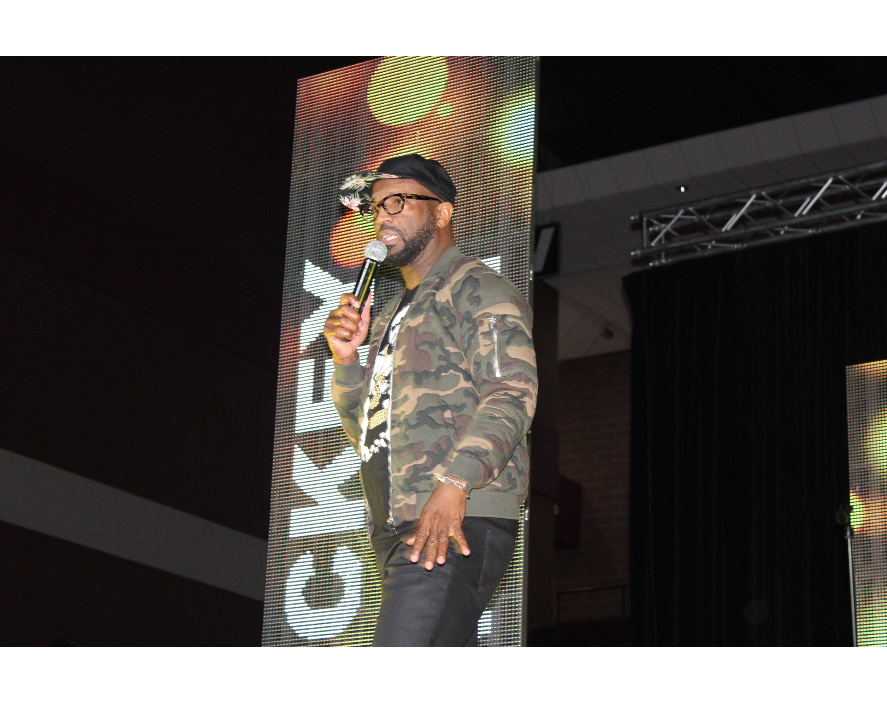
The estate, her bodyguard, and now Smiley are all disputing the same story Oprah told at Cannes.
A comment Oprah Winfrey made at the Cannes Lions advertising festival has ignited a public dispute about what actually happened during Whitney Houston’s 2009 appearance on The Oprah Winfrey Show, with Houston’s estate, her longtime bodyguard, and now radio personality Rickey Smiley all pushing back against Oprah’s account.
Oprah told the Cannes audience that Houston had relapsed on drugs before the taping and was not clean on the day she performed. She also claimed Houston fell off the stage during the appearance, and that she personally pleaded with audience members not to share photos or footage because doing so would ruin Houston’s life. The comments, reported by Entertainment Weekly, circulated widely and drew immediate criticism.
What the estate and bodyguard said
Houston’s estate moved quickly to dispute Oprah’s version of events. Pat Houston, who manages the estate, confirmed that Houston did fall during the visit but offered a sharply different explanation. The fall happened during a sound check, not the performance itself, and was caused by poor lighting and Houston’s unfamiliarity with the stage layout. Pat Houston flatly denied that Whitney was under the influence.
The estate’s statement also pushed back against a broader pattern of interpretation, arguing it was inaccurate and unfair to frame every difficult moment in Houston’s life through the lens of her personal struggles. The audience that day, the statement said, witnessed discipline, talent, and commitment rather than the assumptions others have projected onto her.
Houston’s longtime bodyguard Ray Watson offered a parallel account in a separate interview, corroborating that the fall was a visibility issue and not connected to substance use. Watson said Houston simply could not see the edge of the stage in the darkness and stepped the wrong way.
“I don’t care if she was high or not.”
Rickey Smiley says Oprah and Gayle King are out of touch with the Black community as he addresses Oprah’s claim that Whitney Houston relapsed on drugs and fell off the stage during an appearance on The Oprah Winfrey Show, and calls Whitney… pic.twitter.com/F2hFJpVRV7
— The Art Of Dialogue (@ArtOfDialogue_) June 25, 2026
Smiley’s response
Rickey Smiley addressed the controversy during a livestream, making clear that his concern was less about the factual dispute and more about the act of raising the story at all. Smiley’s position was that regardless of what happened that day, there was no justifiable reason to revisit it publicly now. He also extended his criticism to Gayle King, saying that both she and Oprah have become disconnected from the values and sensitivities of the Black community they once seemed to reflect.
His framing of Houston as a figure of collective meaning to Black America, someone who functions as family rather than simply a celebrity, resonated widely and echoed a recurring theme in the online response to Oprah’s comments.
The larger conversation
The controversy has reopened a long-running tension about who gets to define Whitney Houston’s legacy and on what terms. Houston, who died in 2012 at age 48, remains one of the most beloved figures in American music history. Her 2009 appearance on Oprah’s show, which featured a performance of “I Didn’t Know My Own Strength,” is remembered by many fans as a moment of resilience rather than fragility.
The criticism of Oprah has been notably sharp in this instance, in part because of the setting where she made the remarks. A global advertising festival is a distant context from the community most invested in how Houston is remembered, and several critics have noted the disconnect between that platform and the subject matter Oprah chose to address.
Oprah has not responded publicly to the pushback from Houston’s estate, Watson, or Smiley. The hearing of those three voices together has given the dispute a texture it might not have had if only fans had weighed in.