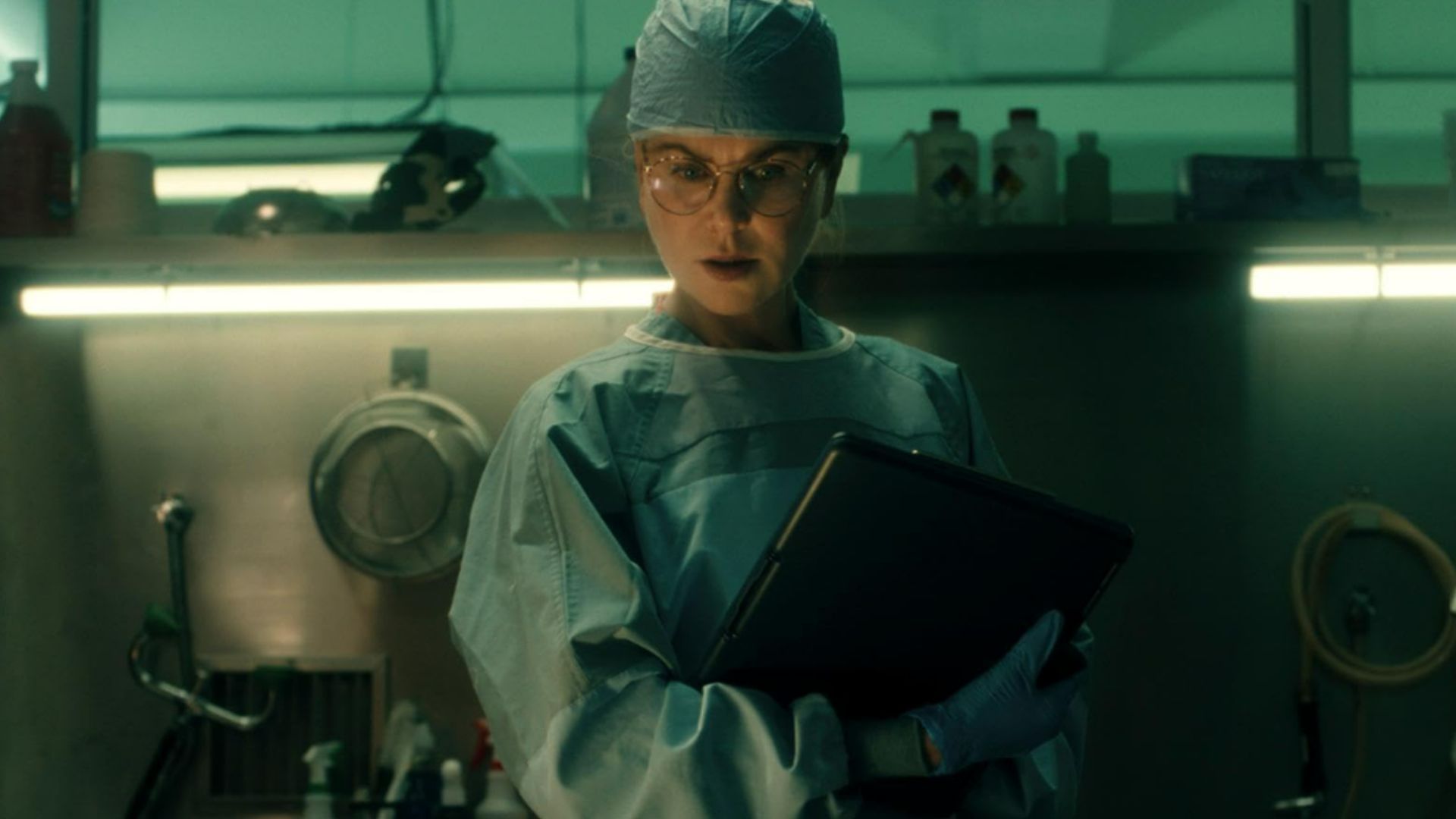

Scarpetta makes a bold move when it comes to their titular character’s backstory. If you have read Patricia Cornwell’s novels, you probably noticed it. Kay’s father dies slowly from leukemia in the books. It is the loss that haunts her but also shapes her understanding of death with time.
Prime Video’s Scarpetta changes this and gives us a different backstory altogether. A robbery takes place in her father’s store and during that, Kay’s Italian immigrant father gets shot. Kay is a young girl when the incident happens. She watches helplessly as she hides from the robbers while watching her father die in front of her. For those who have read the books, this change is huge.
The reason behind this change is that stories don’t operate the same way on screen as they do in books. Scarpetta molds the story to fit a visual medium. When it comes to visual storytelling, the impact has to be felt immediately for a better effect. When it comes to a story in a book, readers can invest emotionally in a slow illness because it becomes easier to do so as they are inside the character’s thoughts.
The showrunner, Liz Sarnoff, has talked about wanting something visually striking to make Kay’s backstory more effective and emotional in a single scene.
Read on to know more!
Scarpetta changes Kay’s backstory to make trauma visible and unforgettable
Scarpetta on Prime Video has eight episodes in total. Unlike books, series have a limited time to show events unfold. So they have to squeeze the desired narrative in within those episodes, while also retaining or maximizing the emotional effect of the plot.
The series had to retain its connection to death and the emotional trauma associated with it. Only then would it make sense for a young Kay to become Dr. Kay Scarpetta, who possesses a keen desire to understand what happens to the body after life ends. Because of limited time, the series provides an immediate starting point so that it works better for its audiences.
One major idea explored by Prime Video’s Scarpetta is how our breaking point shapes us into who we become. The series uses a single incident that’s key to the character’s life and makes it the reason why the person turns out to be the way they are.
For Kay, that moment is her father’s violent death. It is the foundation of who she becomes. When you see her as a child, frozen in that moment next to her father’s bleeding body, and then cut to her adult life surrounded by bodies and violent crimes, it just fits together.
Liz Sarnoff, the showrunner of Scarpetta, shares with The Hollywood Reporter:
“When I talked to Patricia about the death, I said, “For a TV show, we want to make it visually dramatic.” Him dying in a backroom of leukemia and her caring for him didn’t feel like it was going to play, so we came up with the idea of there being a robbery and Kay seeing it. When we see her as a kid over the body and then cut to a scene with her as an adult with a million bodies around her, you start to understand she’s never gotten out of that moment, in the way traumatic moments stay with us.”
Scarpetta uses the same incident to shape Kay’s sister, too. But in a totally different manner. Kay witnesses the death directly, up close. Dorothy, on the other hand, sees it through a glass window. Kay absorbs the trauma and turns it into a career where she faces death every day as if reliving that unfortunate day over and over again.
Dorothy likes to keep death and negativity at a distance. She becomes a children’s book author. She lives her life almost in a bubble, avoiding anything that remotely upsets her. She sabotages anything that feels way too real and heavy. Showrunner Liz shares:
“Dorothy is not as affected by the events – she’s a different persona – and I got the idea that seeing it through the window gave her a degree of removal that created her personality. She’s still doing the same thing. She goes out that night, and she has s*x with that guy. And now, her trauma is that anytime anything gets serious or real or too emotional, she goes out and has s*x and f*cks it up. So it made sense to me that it was the same incident, but how you receive the incident is everything.”
Books need long explanations to describe a scene or an emotion so as to make the reader feel like they are a part of the story or that they are inside the story itself.
However, the same is not applicable to shows. Scarpetta uses this childhood memory as a key incident in both the sisters’ lives, so it had to be something dramatic enough. And televisions can show such events in seconds without the need for long explanations. You see it, you feel it, and you understand the characters.
Stay tuned to Soap Central for more updates and detailed coverage.
Edited by Parishmita Baruah