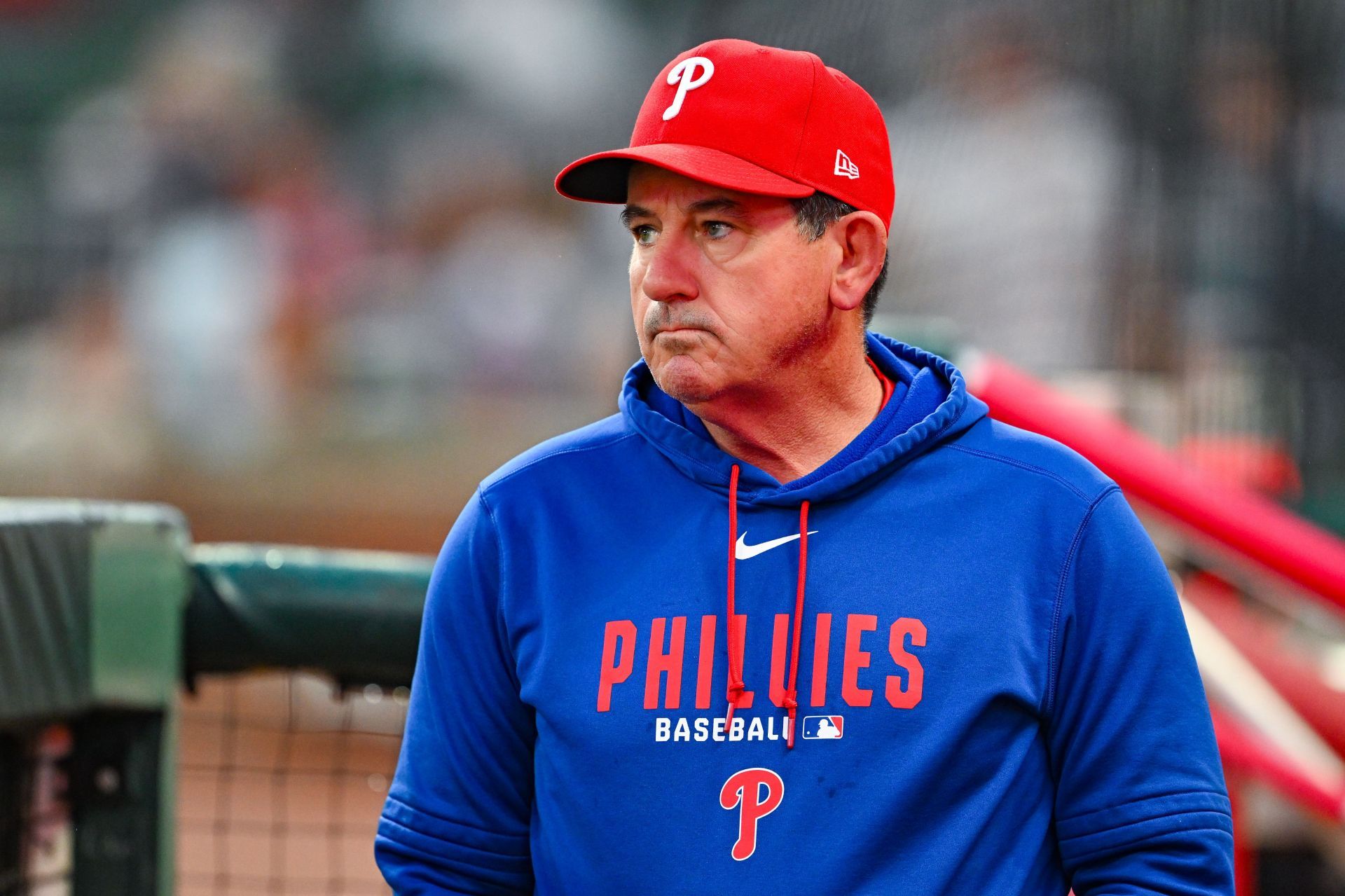

The Philadelphia Phillies shocked its fans and viewers today, on April 28, 2026, by unexpectedly firing manager Rob Thomson. It is the kind of sudden, ruthless plot twist you’d expect from a Hollywood movie rather than sports news.
Rob Thomson was let go despite being the one who led the team to four consecutive postseason appearances. This happened because the Phillies lost 11 of their last 12 games, leaving them tied for the worst record in Major League Baseball at 9-19. The club has now appointed bench coach Don Mattingly as the interim manager for the remainder of the season.
Why Rob Thomson’s dismissal seems straight out of a movie
Rob Thomson getting fired isn’t something most fans support. They think it is unfair given Thomson’s .568 winning percentage, which is the highest for any Phillies manager since 1900, and his history of leading the team to the 2022 World Series. Rob Thomson spent 28 seasons within the New York Yankees organization before he joined the Phillies as a bench coach in 2018. He took over as manager in June 2022 following the dismissal of Joe Girardi. Under his leadership, the Phillies have performed exceptionally well, including winning two National League East titles and reaching the playoffs every year of his tenure.
What makes Rob Thomson’s firing even more unexpected is that his contract was extended through 2027 just months before. This is also one of the reasons why the incident of the Phillies coach’s firing seems straight out of a movie. Sports fans might be familiar with 2011’s Moneyball. The dismissal of Rob Thomson mirrors the theme of the film in an excruciatingly accurate way.
In the movie, manager Art Howe Philip (played by Seymour Hoffman) represents the traditional, human-centric approach to baseball, which focuses on the players and the ‘feel’ of the game. On the other hand, the front office focuses on results and data. The movie shows that even when a manager is successful, they are often seen as replaceable parts of the team.
Phillies coach firing mirrors that of Art Howe. Even though Howe was not shown to be fired, it was shown that his traditional approach was criticized as it did not bring the numbers the front office wanted. Despite Thomson’s historic .568 winning percentage and a track record of deep postseason runs, he was terminated after a brief, 28-game cold streak. Just as the film portrays the manager as a disposable asset in the pursuit of a specific organizational goal, the Phillies moved on from Thomson despite his lifelong dedication to baseball and building a cohesive culture.
The incident is excruciatingly accurate to the movie because it demonstrates that in the modern era, loyalty and previous success are often secondary to the demand for immediate results and management decisions. By replacing a player-favorite like Thomson with Don Mattingly, the Phillies might just have chosen to let go of the human element that had defined their recent success.
For more articles like this, follow Soapcentral.
Edited by Sroban Ghosh