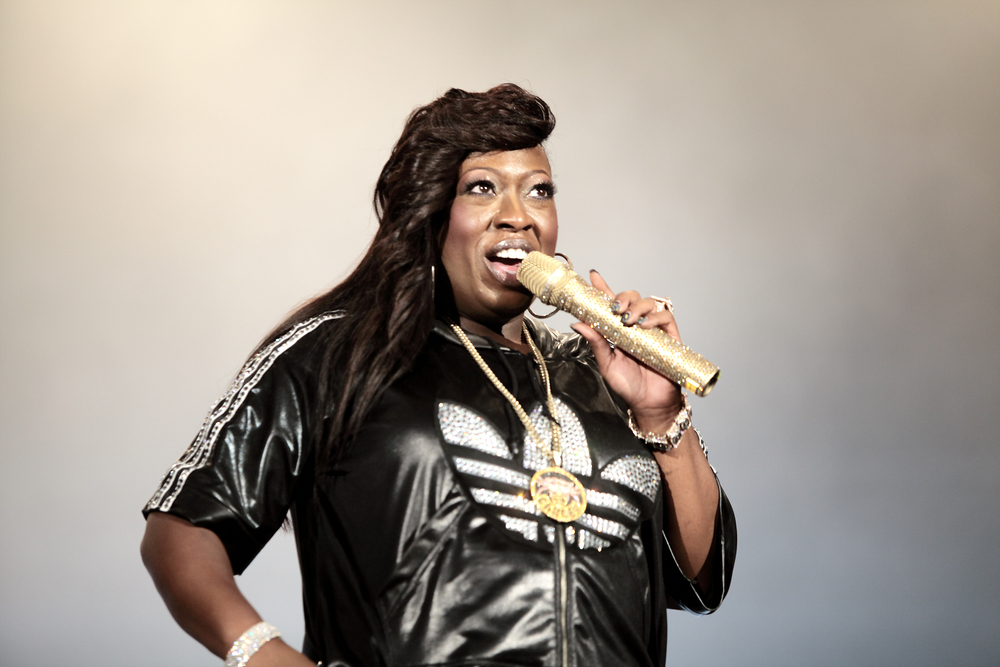
In the streaming era where almost every song ever recorded sits at our fingertips, one notable track remains frustratingly out of reach. Missy Elliott has publicly called on major record labels to finally release her collaboration with Christina Aguilera, a cover of ‘Car Wash’ that’s been trapped in digital limbo for two decades.
The 54-year-old rapper and the 44-year-old pop star joined forces to reimagine Rose Royce’s 1976 disco hit for the Shark Tale soundtrack in 2004. Despite the film’s success and both artists’ massive followings, the song never made its way onto Spotify, Apple Music, or any other streaming platform. No official explanation has ever been given.
Fans demand answers
After fielding countless messages from frustrated listeners asking why they can’t stream the track, Elliott took the issue directly to the source. She posted on X, tagging Universal Music Group and Geffen Records with a straightforward request: “The fans tagged me wanting to know why the song “Car Wash” on #Sharktale soundtrack not on some streaming sites… Can you please help out because many of them have been asking as you can see and miss it.”
.@UMG .@GeffenRecords the fans tagged me wanting to know why the song “Car Wash” on #Sharktale soundtrack not on some streaming sites…Can you please help out because many of them have been asking as you can see and miss it🙏🏾☺️
— Missy Elliott (@MissyElliott) November 25, 2025
The appeal highlights a strange reality in today’s music landscape. While deep cuts from obscure artists populate streaming libraries, this high-profile collaboration between two powerhouse performers remains accessible only through physical copies or unofficial uploads. For a generation raised on instant digital access, the absence feels particularly bizarre.
A historic career continues
Elliott’s frustration comes as she rides a wave of well-earned recognition. In 2023, she became the first female rapper inducted into the Rock and Roll Hall of Fame, a milestone she still struggles to fully process. Speaking on Good Morning America before the ceremony, she admitted the honor hadn’t quite registered: “Words cannot describe. It just hasn’t clicked.”
The achievement capped decades of groundbreaking work that reshaped hip-hop’s sound and visual language. From her futuristic music videos to her innovative production style, Elliott has consistently pushed boundaries in ways that influenced countless artists who followed.
New music on the horizon
While advocating for her past work, Elliott is also looking forward. She recently revealed to the Rolling Stone Music Now podcast that she’s been busy in the studio, hinting at a return to her experimental roots.
“I have something in the works,” she said. “It’s just different. It’s me being experimental again… I got some stuff coming. Some fire.”
The tease marks her first substantial project update since dropping the EP Iconology in 2019. Before that, fans waited 14 years between full albums, with The Cookbook arriving in 2005 as her last complete studio release.
Making history beyond music
Elliott‘s reach extends further than most artists could imagine, quite literally into outer space. Last year, NASA’s Jet Propulsion Laboratory in California selected her 1997 debut single “The Rain (Supa Dupa Fly)” for an extraordinary mission. Using the Deep Space Network, scientists beamed the track 158 million miles to Venus, marking the first time hip-hop traveled beyond Earth.
The transmission took just 14 minutes, traveling at the speed of light to reach the planet symbolizing strength, beauty and empowerment. Elliott celebrated the achievement on X, writing: “The sky is not the limit, it’s just the beginning.”
The bigger picture
The ‘Car Wash’ situation reflects larger issues within the music industry as it continues adapting to streaming’s dominance. Complex licensing agreements, corporate mergers and simple bureaucratic oversights mean some recordings slip through the cracks despite obvious demand.
For Elliott, who built her reputation on innovation and connecting with audiences, having work locked away behind corporate red tape contradicts everything she stands for. Her public challenge to Universal and Geffen represents more than wanting one song available. It’s about artists maintaining control over their creative output and ensuring fans can access the music they love.
Whether the labels will respond to Elliott’s request remains unclear. But by using her platform to address the issue head-on, she’s done what she’s always done best: advocate for herself, her collaborators and the fans who’ve supported her throughout a legendary career. In an industry notorious for leaving artists powerless, that alone feels revolutionary.