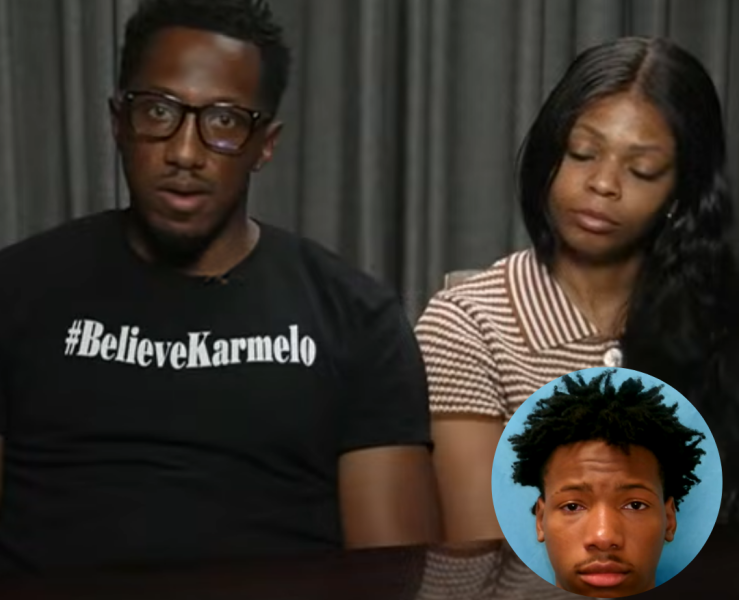
The parents of Karmelo Anthony are speaking out for the first time since their son was convicted of murder and sentenced to 35 years in prison, saying they believe the trial was fundamentally unfair and that the legal system was stacked against their family from the start.
Andrew Anthony and Kala Hayes sat down with radio host Mimi Brown to share their account of what they experienced during the trial, voicing frustration, fear and a firm belief that their son did not receive the fair process he was entitled to.
A conviction that tore a family apart
Karmelo Anthony was convicted in the 2025 stabbing death of Austin Metcalf, a fellow 17-year-old, during a high school track meet in Collin County, Texas. The case drew intense national attention both before and during the trial, with strong opinions forming on all sides well before a verdict was reached.
Following his conviction, Anthony was sentenced to 35 years in prison. His family maintains that the outcome was the result of a process compromised by racial bias and outside influence rather than a fair assessment of the facts.
Concerns about legal guidance and racial pressure
Among the most pointed claims made by Andrew Anthony was an account of the advice the family said they received about legal representation. He described being told to seek out white attorneys, a suggestion he said made clear to the family that race was going to be a defining factor in how their son’s case was handled. That experience, he said, set the tone for everything that followed and left the family feeling manipulated by a system they had hoped would protect their son.
An all-white jury and questions of fairness
The composition of the jury has become one of the central concerns the family is raising as they move toward an appeal. All 12 jurors were white, a fact that Kala Hayes said weighed heavily on her throughout the deliberation process. She expressed a deep sense that the outcome had already been determined before the jury even began its work, a feeling she described as one of the most painful aspects of the entire ordeal.
That concern is not unique to this case. Questions about racial representation in jury pools and the impact that composition can have on verdicts in cases involving Black defendants have been a persistent and well-documented issue within conversations about criminal justice reform in the United States.
Witness testimony and questions of consistency
Beyond the jury, Hayes also raised concerns about the reliability of witness testimony presented during the trial, asserting that the statements made on the stand were riddled with inconsistencies. She described a courtroom environment in which, from her perspective, the truth was obscured rather than revealed, adding another layer to the family’s argument that the conviction was not built on solid ground.
Andrew Anthony echoed those concerns and went further, describing what he saw as a media-driven presumption of guilt that preceded the trial entirely. He argued that by the time his son walked into the courtroom, public opinion had already rendered its verdict, making the legal process feel like a formality rather than a genuine search for justice.
Threats, fear and the road to appeal
The aftermath of the trial has brought its own set of challenges. Andrew Anthony revealed that the family has received ongoing threats since the conviction, describing a climate of fear that has made an already devastating situation even harder to navigate.
Despite that pressure, the family says they are moving forward with an appeal and remain committed to fighting for what they believe is justice for their son. The appeal process is now underway, and the Anthony family says they have no intention of letting the matter rest.
Source: Interview with radio host Mimi Brown, as reported across multiple outlets