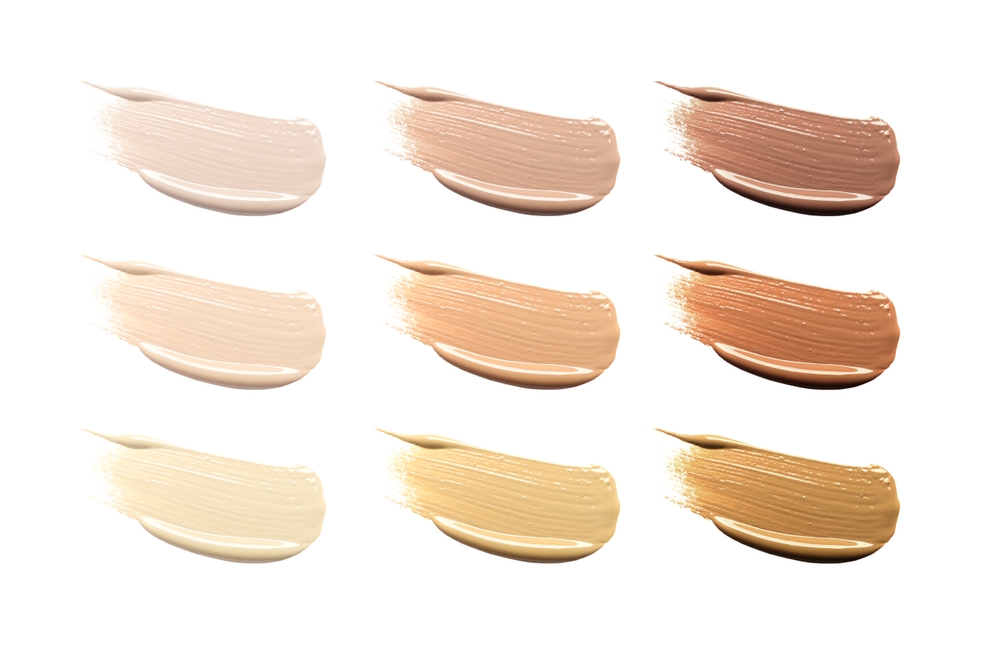
From drugstore buys to luxury picks, the options for melanin-rich complexions have never been better
For decades, finding a foundation that worked for deep skin tones meant working with a fraction of the options available to lighter complexions. Brands frequently stopped their shade ranges before reaching the deeper end of the spectrum, and when they did extend that far, the formulas often oxidized to orange or settled ashy by midday.
That has changed significantly. Driven in part by consumer pressure and the industry-wide reckoning that followed the launch of Fenty Beauty in 2017, more brands have expanded their shade ranges and started paying closer attention to the undertones within deeper complexions. The result is a market where people with deep skin can actually shop with options.
Understanding undertones before you shop
Shade depth — how light or dark a foundation reads — is only one part of the equation. Undertones are equally important and frequently overlooked. They fall into three categories: warm, which reads golden or peachy; cool, which carries hints of red, pink, or blue; and neutral, which sits between the two.
Deep skin tones span all three, and a foundation that matches your depth but clashes with your undertone will still look wrong. The most reliable way to identify your undertone is to look at the veins on the inside of your wrist — green veins tend to signal warm undertones, blue or purple veins lean cool, and a mix suggests neutral. When testing a foundation in person, apply it along the jawline rather than on the back of the hand and check the color in natural light after a few minutes to see how it settles.
Five foundations worth trying
Fenty Beauty Pro Filt’r Soft Matte Longwear Foundation
The launch that changed the conversation. Fenty entered the market with 40 shades — now expanded further — and demonstrated that deep skin tones were not an afterthought but a starting point. The Pro Filt’r formula delivers a matte finish that controls shine without going flat, and the shade naming system makes it easier to identify undertone matches at a glance. It wears well through the day and resists oxidation.
Armani Beauty Luminous Silk Foundation
A long-standing favorite among makeup artists, the Luminous Silk has expanded its shade range to include deeper complexions. Its reputation is built on a lightweight, breathable formula that gives skin a lit-from-within finish without sitting heavy. For people with deep skin who prefer radiance over matte, this is one of the more reliable options at the luxury end of the market.
Estée Lauder Double Wear Stay-in-Place Foundation
A full-coverage formula built for longevity. Double Wear is designed to hold through heat and humidity, which makes it particularly useful for oily and combination skin types. Its deeper shades have a reputation for maintaining their true tone throughout the day rather than shifting orange or gray — a problem that has historically plagued foundations at both ends of the spectrum when they venture into deeper ranges.
MOB Beauty Cream Foundation
One of the more thoughtful formulations for deep olive undertones specifically. MOB Beauty incorporates green pigments into its deeper shades to counteract the warm-orange drift that often happens with olive complexions. The cream texture blends into the skin and wears naturally rather than reading as a distinct layer on top of it.
L’Oréal True Match Super-Blendable Foundation
The strongest drugstore option in the category. True Match has built its identity around undertone transparency, labeling each shade with a W, N, or C designation so shoppers can narrow down their options before they even open a bottle. The formula is lightweight, blends easily, and delivers a natural finish that works for everyday wear. For people who would rather not spend luxury prices to find a shade that actually fits, this is the most practical starting point.
One more thing before you buy
No foundation works the same on every skin type, and the only reliable test is wearing it. When possible, ask for samples and try them across different lighting conditions — what looks right under store lighting often reads differently in natural daylight. If a shade oxidizes darker or warmer on your skin within an hour, it is not the right match regardless of how it looks at first application.