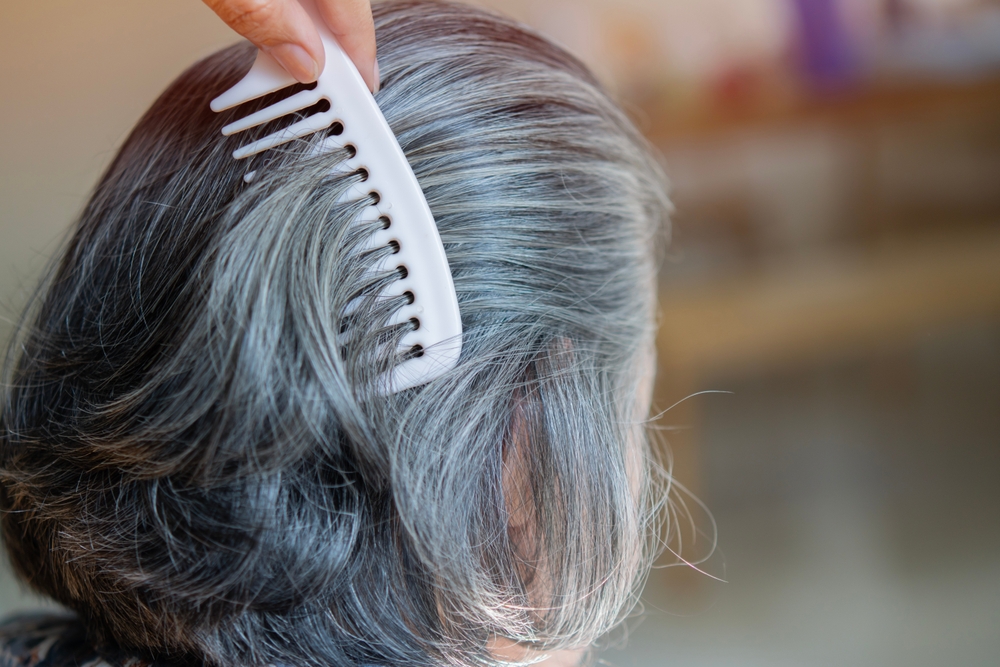
A surprising side effect in lung cancer patients has scientists rethinking gray hair
A cancer study from 2017 is getting a second look — and this time, the focus is not on tumors. Researchers are now exploring whether the same immunotherapy drugs used to treat lung cancer could one day prevent or even reverse gray hair, following an unexpected discovery that stopped scientists in their tracks nearly a decade ago.
In that original study, 14 patients with lung cancer who received anti-PD-1 and anti-PD-L1 inhibitors — a class of immunotherapy drugs — experienced something nobody anticipated: their gray hair began regaining its original color. Researchers at the time were not sure exactly why it happened, but they noted that hair re-pigmentation could signal that treatment was working in cancer patients.
That finding planted a seed. In the years since, scientists have been quietly working to understand what those drugs were doing to hair follicles — and whether that mechanism could be used intentionally.
What science says about why hair turns gray
To understand why this research matters, it helps to know what actually causes hair to go gray in the first place. Hair gets its color from melanin, a pigment produced by specialized cells in the hair follicle called melanocytes. As people age, those melanocyte cells begin to produce less melanin, and eventually stop renewing altogether, causing hair to shift from its natural color to gray, silver, or white.
Dr. Melissa Harris, a biologist at the University of Alabama, has been among the researchers focused specifically on how immunotherapy might address that process. She believes that the loss of melanocytes over time is the primary driver of graying, and that reactivating the stem cells responsible for producing them is the path to restoring color.
Her team has not yet tested the immunotherapy approach in humans — research so far has been conducted on cells and animal models — but the results have mirrored what was observed in the 2017 lung cancer paper. More research in humans will be needed before any treatment becomes available to the public.
Why current anti-gray products fall short
For now, there is no proven way to stop hair from going gray. The market is flooded with serums, supplements, and topical products that claim to delay or reverse graying, and online searches for anti-gray hair products have surged in recent years. But dermatologists are clear: none of these products have definitive science behind them.
Ingredients like caffeine, peptides, biotin, and vitamin B12 appear frequently in anti-gray formulas, and while some vitamins play a role in hair follicle health, no clinical studies confirm that any supplement will prevent or reverse graying in humans. The challenge, as dermatologists note, is that the exact cause of graying is still not fully understood — which makes it difficult to target pharmacologically.
Anti-gray serums are generally considered low risk, though they may cause scalp irritation in some users. Supplements carry the possibility of gastrointestinal side effects. The FDA does not review these products for safety before they reach shelves, so consumers should approach them with realistic expectations and check with a doctor if they have concerns.
Stress has also been studied as a contributing factor to premature graying. A 2021 study found that stress can trigger graying in humans, and reducing that stress appeared to allow some hair follicles to temporarily return to their natural color — though the effect was limited in scope and not permanent.
How close is a real solution for gray hair
The immunotherapy research represents one of the more scientifically grounded leads in the gray hair space, precisely because it started from an observed clinical phenomenon rather than a marketing claim. When lung cancer patients unexpectedly regained hair color during treatment, it gave researchers a real biological event to work backward from.
Dr. Harris told BBC Science Focus in 2025 that the tools available to researchers are getting closer to making a treatment possible, and pointed to a growing body of evidence in the scientific literature showing that re-pigmentation is achievable under certain conditions. The work remains in its early stages, and human trials are the necessary next step before anything reaches consumers.
Until then, addressing factors known to accelerate graying — including vitamin deficiencies, smoking, and chronic stress — may help slow the process for some people. And for those who have already gone gray, hair dye remains the most reliable option. But for the first time in a long time, scientists have a genuinely promising lead — and it came from the last place most people would have thought to look.