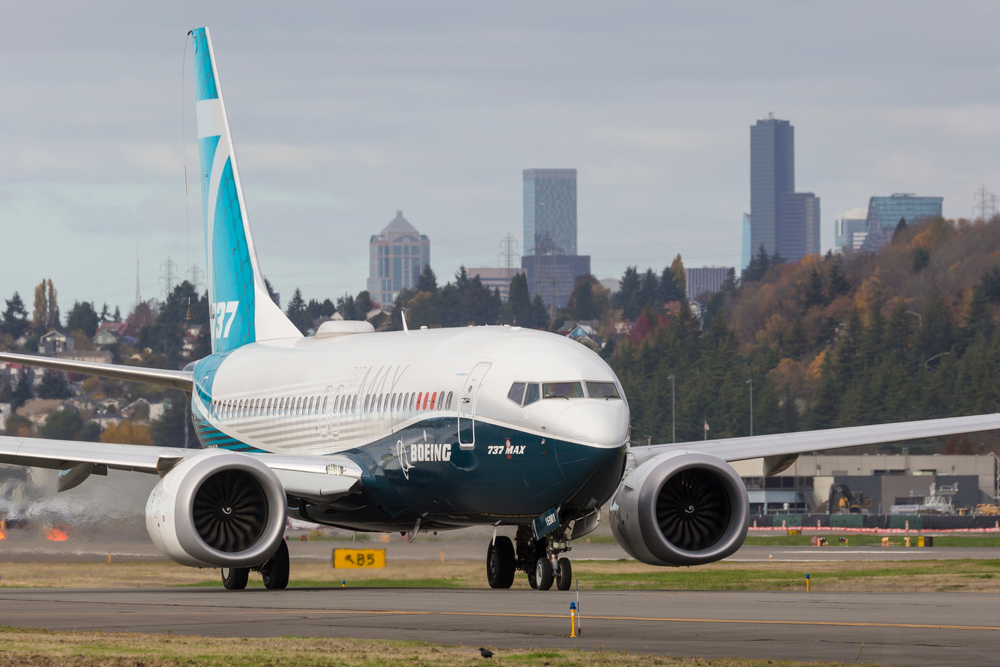
The two long-delayed variants of Boeing’s 737 MAX family are edging closer to a regulatory finish line that has eluded the aviation giant for years. Both the FAA and its European counterpart confirmed Wednesday that certification of the MAX 7 and MAX 10 is no longer a question of if — it is a question of when.
FAA Deputy Administrator Chris Rocheleau told reporters at a safety forum in Chantilly, Virginia, that the remaining certification work amounts to little more than finalizing paperwork and ensuring mutual confidence between the two regulatory bodies. The European Union Aviation Safety Agency’s executive director, Florian Guillermet, said validating the MAX 10 for service sits at the top of his agency’s priority list, with only a few weeks of intensive document processing left on the current schedule.
The tone from both officials was markedly different from the years of tension that followed the 2018 and 2019 MAX crashes, which killed 346 people and exposed critical flaws in Boeing’s oversight and flight-control software. Those disasters badly strained the relationship between the FAA and EASA, prompting European regulators to demand far more rigorous independent reviews of Boeing designs. On Wednesday, Rocheleau and Guillermet each went out of their way to highlight how much that relationship has improved, with both agencies now working toward a formal data-sharing agreement for certification and risk management.
The Boeing certification timeline
FAA Administrator Bryan Bedford said last month he expects the MAX 7 to receive certification this summer, with an August 2026 target widely cited, while the MAX 10 is expected to follow before year-end. Boeing‘s own figures show roughly 80 percent of required flight-test programs are now complete, and the MAX 10 has entered Type Inspection Authorization Phase 2 — the final stage of certification flight testing.
The primary technical obstacle — a redesign of the engine anti-ice system, which posed risks of thermal damage to the nacelle during prolonged icing conditions — appears to have been resolved. Boeing also developed a revised crew alerting system mandated by Congress following the fatal crashes, which will be retrofitted across the entire MAX fleet.
Airlines waiting on the Boeing MAX
The stakes for Boeing and the airlines waiting on these jets are enormous. Southwest Airlines, which holds roughly 270 firm orders for the MAX 7, expects to begin operations in the first quarter of 2027. United Airlines leads the MAX 10 order book, while Ryanair holds 150 firm orders with an additional 150 options, expecting deliveries to start in spring 2027. WestJet, the launch customer for the MAX 10, is targeting a late 2026 or early 2027 entry into service.
Combined, the MAX 7 and MAX 10 carry more than 1,700 orders globally. The MAX 10, in particular, has been positioned as Boeing’s most direct answer to the Airbus A321XLR in the competitive single-aisle market.
What approval m eans for Boeing
Certification would allow Boeing to accelerate production of the 737 family from 42 to 47 aircraft per month, with further increases to 52 monthly jets targeted for early 2027. The company is also adding a fourth 737 production line in Everett, Washington. For a manufacturer that has spent years navigating safety investigations, production freezes, and a crisis of public trust, getting the MAX 7 and MAX 10 into service represents far more than a regulatory checkbox.
Rocheleau summed up the current moment with measured confidence, saying the FAA and EASA are making sure there is a shared comfort level between the two certification offices — and that these planes are ready to fly when the time comes.
Source: U.S. News & World Report