A genealogist reflects on memory, survival, and what we owe the ancestors who carried us
As the United States approaches its 250th anniversary, the question is not simply what America has become. It is who carried this nation long enough for us to arrive here.
For many Americans, the semiquincentennial will be marked by fireworks, commemorations, reenactments, and patriotic reflection. But for Black Americans, America250 carries a more complicated inheritance. It forces us to ask difficult questions about memory, citizenship, belonging, and survival. It also invites us to look backward — not only toward the founding fathers, but toward the unnamed mothers, fathers, laborers, freedom seekers, church women, soldiers, cooks, wet nurses, farmers, abolitionists, and children whose names may never appear in textbooks, yet whose sacrifices built the foundation beneath our feet.
I often say that I am the hopes and dreams of my ancestors. That statement is not poetic exaggeration. It is my genealogical truth.
Every one of us represents survival against impossible odds. Somewhere in our family line was a woman who endured what should have broken her. Somewhere was a man denied freedom, literacy, land, or citizenship who still managed to leave behind descendants who would continue the story. Somewhere was an ancestor who carried memory forward when the world tried to erase it.
What America250 means for Black Americans
Two hundred and fifty years ago, in 1776, the America celebrated in history books did not belong equally to everyone living on this soil. The nation declared independence while enslavement remained firmly embedded within its economic and political structure. Enslaved Africans were already building the wealth of the colonies. Indigenous communities faced displacement and destruction. Black Americans were simultaneously excluded from the promises of liberty while being essential to the nation’s survival.
Yet even in that contradiction, our ancestors imagined futures beyond bondage. That is one of the most extraordinary truths genealogy teaches us.
When we study our family histories, we begin to understand that survival itself was an act of resistance. Black genealogy is not merely about collecting names and dates. It is about reconstructing humanity in the aftermath of systems designed to erase identity. It is about reclaiming voices buried beneath census records, plantation ledgers, death certificates, oral histories, church programs, military records, and fading photographs tucked into family Bibles.
Our ancestors preserved legacy long before archives welcomed them. They did it through storytelling around kitchen tables. Through recipes carried North during the Great Migration. Through hymns sung in small churches. Through naming traditions. Through braiding hair. Through the careful protection of photographs. Through memory itself.
In many Black families, the kitchen became an archive, courtroom, sanctuary, and classroom all at once.
Why genealogy matters more than ever
I grew up listening to elders tell stories about down South, about migration, segregation, church mothers, railroad jobs, factory shifts, and neighborhoods that no longer exist. Those stories shaped my understanding of genealogy before I ever opened a historical record. They taught me that history is not distant. It lives in people.
Today, many young people are growing up in a society struggling with cultural memory. We live in an age of shortened attention spans, algorithm-driven identity, and historical misinformation. There are children who know social media trends better than they know the names of their great-grandparents. Entire communities face disconnection from the very stories that once anchored identity and resilience.
This is why genealogy matters now more than ever. It gives young people something modern society often fails to provide: rootedness.
When a child learns that their ancestor survived enslavement, escaped through the Underground Railroad, migrated North for opportunity, fought in war, built churches, organized neighborhoods, educated children, marched and protested, or simply endured long enough to create another generation, it changes how they see themselves. It reframes identity from limitation to legacy.
That is particularly important in Black American communities, where history has too often been fragmented through systemic displacement, racism, urban renewal, mass incarceration, economic inequality, and the destruction of historically Black neighborhoods.
What Detroit taught me about freedom
Our ancestors understood something we are now rediscovering: memory is survival.
Two hundred and fifty years ago, Black people in America were creating networks of resistance and protection despite extraordinary danger. Some fought openly for freedom. Others resisted quietly through literacy, spiritual practice, mutual aid, and kinship networks. Free Black communities emerged in Northern cities while enslaved communities developed systems of communication and care hidden in plain sight.
By the early nineteenth century, Black abolitionists, church leaders, and Underground Railroad operatives had constructed pathways to liberation across the country. In Detroit, where I have spent years researching Underground Railroad history, freedom seekers crossed the Detroit River into Canada, often under cover of darkness. Detroit became known as Midnight in Underground Railroad code language — the final stop before freedom.
What fascinates me most is not only the courage of those escaping bondage, but the ordinary people who helped ensure their legacy continued. They risked everything so future generations could exist.
What the ancestors would think of America today
So what would those ancestors think if they saw America today? I believe they would feel pride and heartbreak simultaneously.
They would marvel at descendants becoming historians, doctors, educators, judges, artists, elected officials, and scholars. They would see Black families preserving lineages once considered unworthy of preservation. They would witness DNA technology reconnecting families separated by slavery and migration. They would see Black genealogy emerging from the margins into national consciousness, and despite the integration of artificial intelligence, they would see how this technology can break down genealogical walls.
But they would also recognize familiar struggles. They would recognize attempts to silence history. They would recognize attacks on truth and education. They would recognize inequality disguised in modern language. They would recognize how quickly societies forget the people who built them.
And perhaps they would ask us the same question we must ask ourselves during America250: What are we leaving behind for the next generation?
The answer we owe to those who came before us
Legacy is not accidental. It requires preservation, storytelling, documentation, and responsibility. It requires teaching children not only where they are going, but where they came from. It requires communities willing to protect historical memory even when it is uncomfortable.
America250 should not simply celebrate the nation’s triumphs. It should challenge us to confront the full complexity of the American story. Because the truth is this: Black history is not separate from American history. It is central to it.
Their dreams survive in us.
Every family tree recovered from silence is an act of restoration. Every elder interviewed before their stories disappear is an act of preservation. Every child taught their history becomes evidence that the ancestors did not survive in vain.
As America approaches 250 years, perhaps the greatest tribute we can offer those who came before us is not simply remembrance, but continuation. To continue telling the stories. To continue preserving the records. To continue teaching the children. To continue building communities worthy of their sacrifice. Because we are, indeed, the hopes and dreams of our ancestors.
The question now is whether we will become the ancestors future generations deserve.
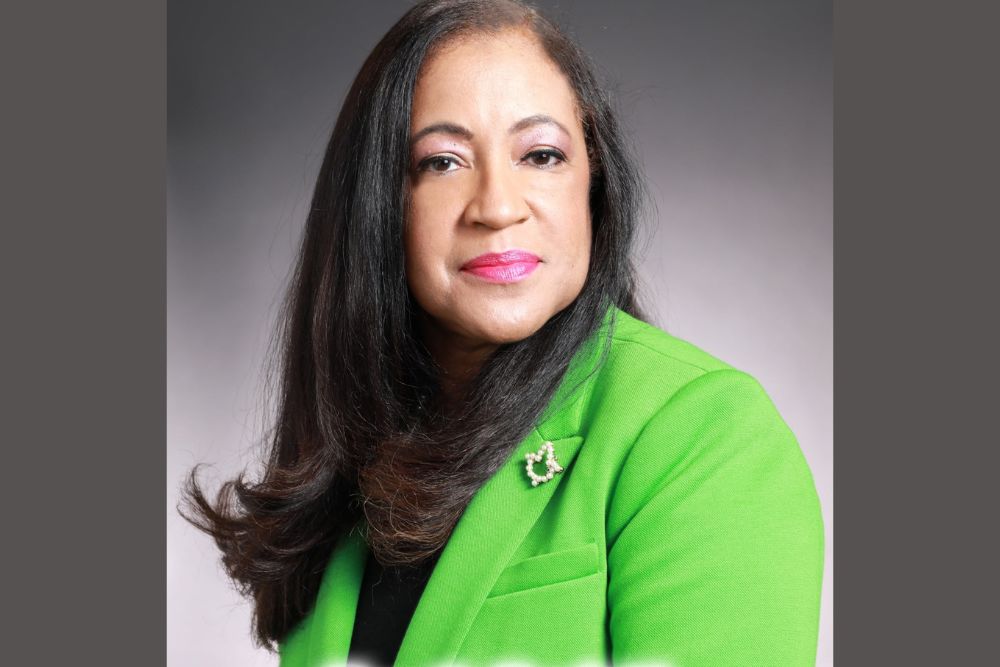
Dr. Carolyn Haliburton Carter is a historian, professional genealogist, Underground Railroad researcher, and storyteller specializing in African American lineage, identity, and digital heritage. She is the founder of Storykeepers Heritage Network, where she bridges genealogy, history, and technology to preserve untold stories. She serves as chair of the City of Detroit Historic Designation Advisory Board and as a member of the Governor of Michigan’s Freedom Trail Commission.