Black women are dying and their bodies are not the problem
Black women in the United States die from pregnancy-related complications at rates that cannot be explained by income, education or zip code. The disparities persist even when all of those factors are held equal to those of non-Black women. Preterm birth rates are higher. Maternal death rates are higher. When Black women need fibroid surgery they are more likely to be offered open procedures with longer hospital stays and harder recoveries rather than minimally invasive options that allow faster return to normal life.
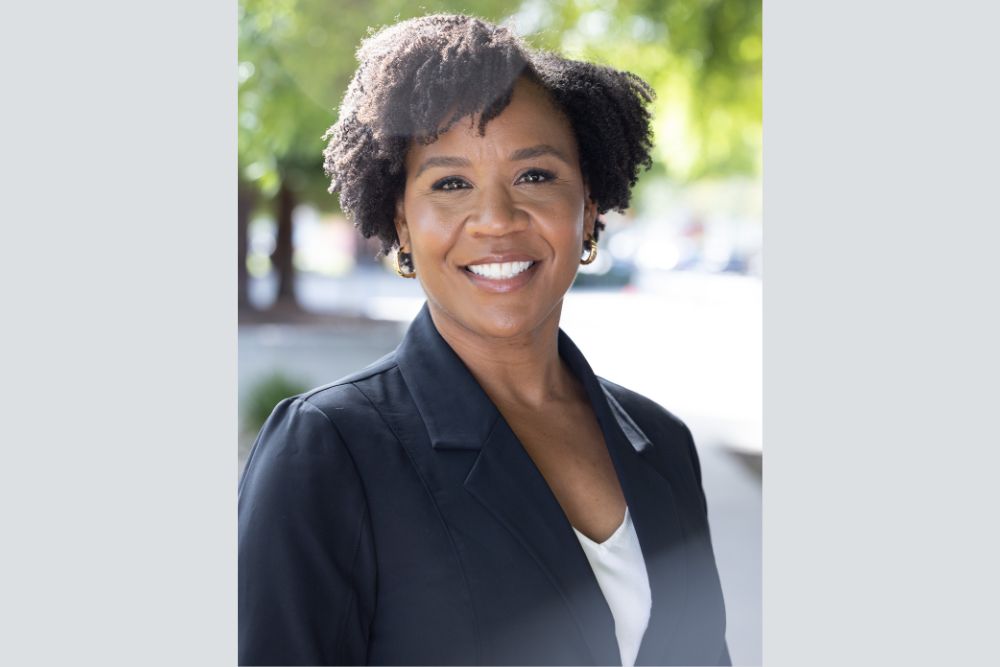
Dr. Andrea V. Jackson has spent her career confronting those numbers head on. As chair of the Department of Obstetrics, Gynecology and Reproductive Sciences at the University of California, San Francisco, she has co-founded two programs designed to close the gaps that existing care kept leaving open. In a conversation with Rolling Out Health IQ she was direct about what Black women are facing and what they have every right to demand.
The system is the problem not the body
The first thing Dr. Jackson wants Black women and families to understand is that maternal mortality is not a story about Black women’s bodies failing. The physical responses that show up during pregnancy, whether elevated blood pressure or other systemic complications, are normal responses to chronic intergenerational stress. They are what happens when a body navigates racism on a daily basis across generations. That is not a failure. That is survival.
What Black women can do is build their care team early, ideally before pregnancy or as soon as a positive test comes back. Finding a primary care physician who listens and an OB or midwife they trust are the first steps. The statistics are not a death sentence. They are a call to be proactive.
What every Black woman should know before entering a delivery room
Dr. Jackson is unambiguous about the rights every Black woman carries into a labor and delivery floor. Nobody can force her to do something she does not want to do. That includes a cesarean section. She has the right to ask for the reasoning behind every recommendation and to take time to consider it with a partner or family member. Her rights to her own body do not disappear the moment she enters a hospital.
The second piece of advice she credits to her own mother, a former ICU nurse, is to never go to the hospital alone. That advocate can be a doula, a partner, an aunt or a grandmother. What matters is that someone else is present, listening and empowered to speak up at any point during the process.
What Embrace was built to do
Dr. Jackson co-founded Embrace in 2018 alongside midwife Melinda Fowler and licensed clinical social worker Markita Barideaux, directly in response to stories of Black women dying or having near-death experiences around childbirth. The program replaces the standard 15 to 20 minute individual prenatal appointment with extended two-hour group visits among patients with similar due dates. Research shows the group model reduces preterm birth rates for Black women specifically.
The team discovered that Black patients were not participating in UCSF’s existing group prenatal care program. When they asked why, the answer was clear. The group was not speaking to them. It was not addressing the disparities they were navigating. Embrace was created to fill that space directly.
The program is race-concordant, midwifery-led and integrates mental health services both within the group visits and one-on-one for up to a year postpartum. It partners with Sister Web Community Doulas in San Francisco. Dr. Jackson describes it as a soft place to land, and its goal goes beyond safe delivery. The goal is joy within the birthing experience, not just survival through it.
Training the next generation of physicians
Every quarter Dr. Jackson delivers a presentation to incoming medical students at UCSF on racial healthcare disparities in obstetrics and gynecology. Many arrive never having heard of the Tuskegee experiment or the history of reproductive coercion in the United States. Building that baseline understanding is essential before any physician can understand why a Black patient might withhold trust or require more effort to establish a therapeutic relationship.
Cultural humility is the second component. Scenario-based learning and role-playing help students understand that no matter how much medical knowledge they accumulate, they do not go home with the patient. They do not know that patient’s daily reality. Holding that awareness is not optional. It is a clinical requirement.
Black birthing individuals in the Bay Area can visit obgyn.ucsf.edu to sign up for an Embrace cohort or reach the team at obgyn.ucsf.edu