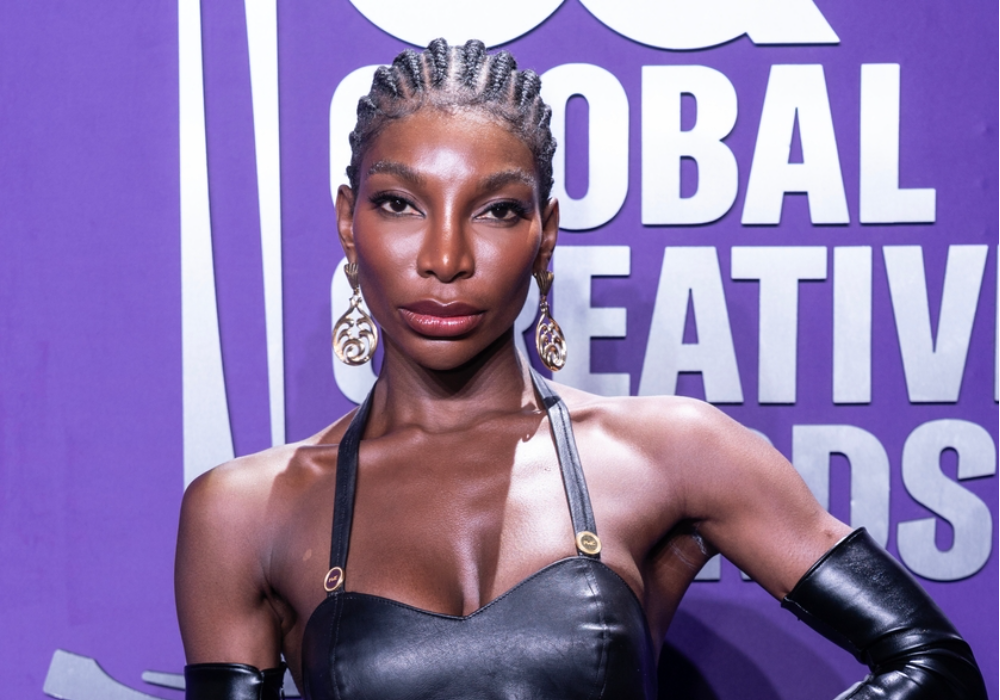
Actor reflects on Marvel pressure and creative uncertainty after breakout success
Michaela Coel’s appearance in Black Panther: Wakanda Forever carried the kind of visibility most actors only encounter once in a career. But behind the scenes, her experience was shaped less by red carpets and more by hesitation. The 38-year-old actor has reflected that she did not feel fully prepared for the scale and demands of the Marvel production world when she joined the film.
Coel portrayed Aneka, a member of the Dora Milaje, Wakanda’s elite group of warriors. The role placed her within a global franchise directed by Ryan Coogler and featuring a high-profile ensemble cast that included Lupita Nyong’o and Angela Bassett. While the film became a major cultural moment, Coel’s personal experience was marked by adjustment rather than ease.
She later acknowledged that the environment required a different kind of performance style than she was used to, one that tested her confidence in unfamiliar ways.
The green screen learning curve
A central challenge for Coel was the technical nature of filming in a heavily digital environment. Large portions of Wakanda Forever relied on green screen production, where actors perform without physical sets or tangible surroundings.
For Coel, whose work often depends on emotional immediacy and grounded interaction, this created a gap in her process. She has described struggling to adapt to acting in spaces that required imagination to fill in what was not physically present. It was not a question of talent, but of familiarity with a production style she had not yet mastered.
Watching experienced co-stars move through these environments highlighted that difference. Coel has said she observed the ease with which others navigated the scale of the production, while she found herself still learning how to operate within it. That contrast deepened her sense that she was not fully aligned with the demands of the role at that moment in her career.
Rather than forcing adaptation, she ultimately stepped away, recognizing that the fit between actor and environment matters as much as the opportunity itself.
Wakanda and post-breakout pressure
Coel’s decision also came at a time of intense career attention following the success of I May Destroy You, her acclaimed 2020 series. The show earned widespread recognition and positioned her as one of the most distinctive creative voices working in television.
With that success came increased industry pressure. Coel has reflected on how quickly expectations shifted, with new opportunities arriving in rapid succession. She found herself questioning whether some of the decisions she was being encouraged to make were driven by genuine creative interest or by external urgency to maintain momentum.
She has also described discomfort with the idea of making career moves based on fear of losing visibility. Instead, she began reassessing what kinds of projects aligned with her instincts, even if that meant stepping back from high-profile opportunities.
This period marked a shift in how she approached her work, moving away from momentum-driven choices toward more intentional selection.
Choosing space over spectacle
Coel has often gravitated toward intimate storytelling, where dialogue and psychological detail take center stage. In contrast, large-scale productions like Marvel require actors to work within fragmented environments, where scenes are assembled later through visual effects.
That difference became central to her reflection on Wakanda Forever. She recognized that while she admired the project and the people involved, the working style did not align with her strengths at that stage of her development.
Her decision was not framed as rejection of the franchise’s significance, but as an acknowledgment of where she felt most effective as an artist. Stepping back allowed her to preserve clarity about the kind of work she wanted to pursue moving forward.
Friends and collaborators have also described her as an artist guided by emotional honesty and strong creative boundaries, someone who prioritizes meaning over scale.
Coel and clarity in career choices
As Coel continues to shape her career, her choices reflect a broader conversation happening in the industry about success, pace, and creative control. Her decision to step away from aspects of Wakanda Forever underscores a growing awareness among actors that visibility does not always equal alignment.
Instead of following expectations shaped by breakout success, Coel has chosen to recalibrate. That includes being selective about roles and allowing space for uncertainty rather than rushing into the next phase of her career.
Her approach suggests a recalibration of what it means to move forward in an industry that often rewards speed. For Coel, the emphasis appears to be on sustainability, artistic fit, and long-term creative integrity rather than immediate momentum.