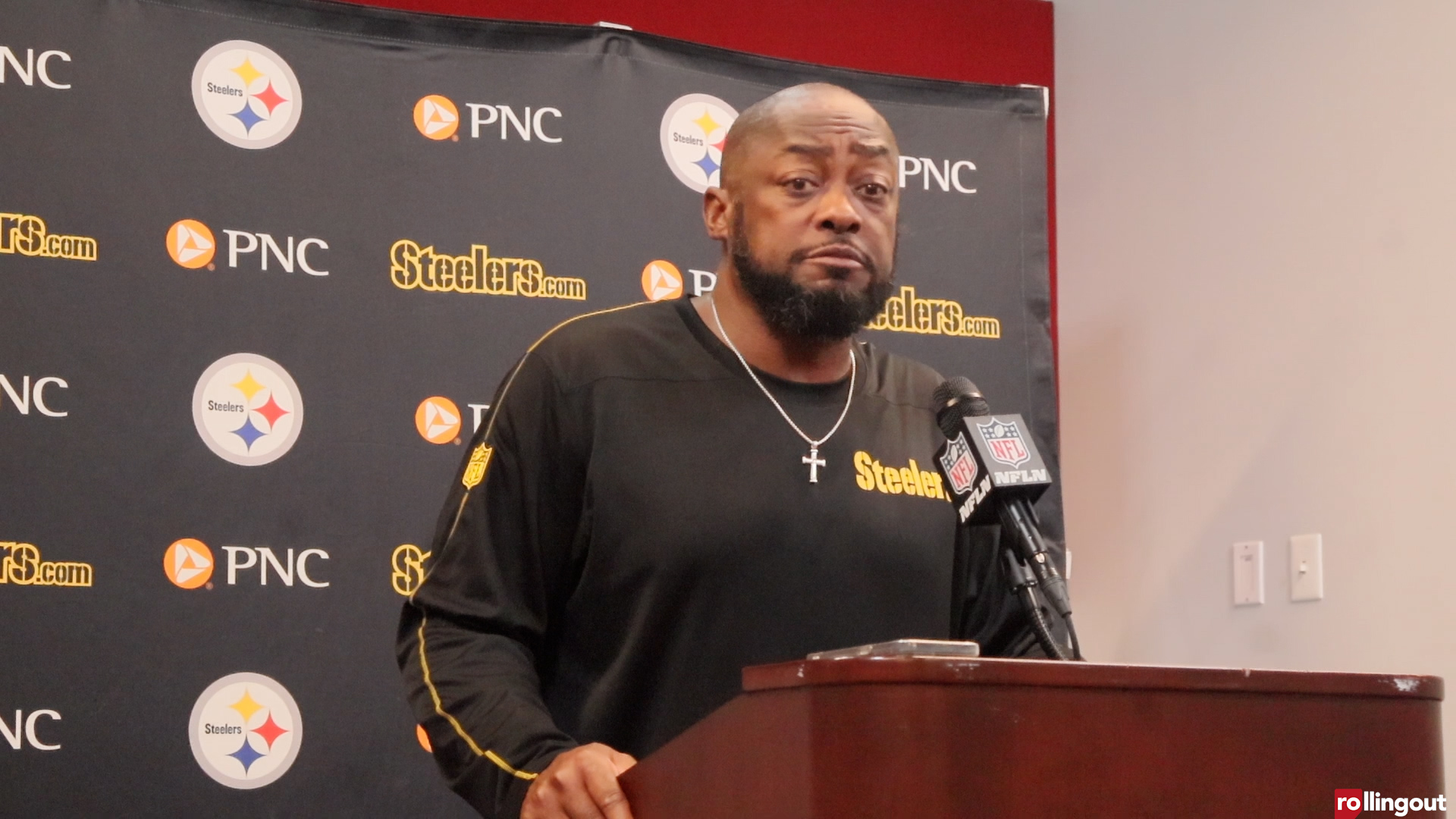
The Pittsburgh Steelers have only had three head coaches in nearly 60 years. Now, there will be a fourth.
Mike Tomlin walked away the way he lived in Pittsburgh: on his own terms, unapologetic, and leaving behind a legacy that is at once extraordinary and unresolved.
On Tuesday afternoon, the Steelers announced that Tomlin had stepped down as head coach, ending a 19-year tenure unlike any in modern professional sports. In nearly two decades on the sideline, Tomlin never endured a losing season — a feat so improbable that Steelers president Art Rooney II said it “will likely never be duplicated.”
The decision came one day after Pittsburgh’s season ended with a 30-6 thrashing by the Houston Texans in the AFC wild-card round, a game that felt less like a conclusion than an echo.

“During our meeting today, Coach Tomlin informed me that he has decided to step down as our Head Coach,” Rooney said in a statement obtained by ESPN. “Obviously, I am extremely grateful to Mike for all the hard work, dedication and success we have shared over the last 19 years.”
Tomlin’s tenure defined by unmatched consistency
Tomlin, 53, informed players of his decision at their 2 p.m. meeting, closing the book on an era that included a Super Bowl championship, two conference titles, eight AFC North crowns and 13 playoff appearances. He leaves tied with Chuck Noll — his spiritual predecessor in Pittsburgh lore — for ninth on the NFL’s all-time list with 193 regular-season wins, having secured his 200th career victory late in the 2025 season.
The numbers are staggering. So, too, is the context. The Steelers have now had only three head coaches since 1969, and Tomlin was the longest-tenured head coach of any single North American professional sports franchise before stepping aside. He had two years remaining on a contract extension signed in 2024, one that could have kept him in Pittsburgh through 2027.
Because he resigned while still under contract, the Steelers will retain Tomlin’s coaching rights and could negotiate compensation if he returns to an NFL sideline before the end of the 2027 season.
The achievements — and the asterisk
Yet Tomlin’s exit is complicated by what his résumé does not include. For all the consistency and stability, his final nine seasons ended without a single postseason victory. His last playoff win came in January 2017 against the Kansas City Chiefs.
Since then, the Steelers went one-and-done six times, were outscored 131-58 in their last three wild-card losses, and became the first team in NFL history to lose five straight playoff games by double digits. In a city defined by championship expectations, those shortcomings lingered louder than Tomlin’s week-to-week reliability.
A fractured ending, a familiar scene
That tension — between sustained excellence and lingering frustration — defined Tomlin’s final moments in Pittsburgh. His last game ended amid boos and revived chants to fire the coach, as Tomlin and quarterback Aaron Rodgers disappeared into the tunnel.
“When you don’t get it done, words are cheap,” Tomlin said in the postgame press conference aired on ESPN. “You either do or you don’t.”
The Steelers ownership are eternally grateful for Tomlin’s two-decade tenure for the proud franchise.
“It is hard for me to put into words the level of respect and appreciation I have for Coach Tomlin,” Rooney said in his statement. “He guided the franchise to our sixth Super Bowl championship and made the playoffs 13 times during his tenure, including winning the AFC North eight times in his career. His track record of never having a losing season in 19 years will likely never be duplicated.
“My family and I, and everyone connected to Steelers management, are forever grateful for the passion and dedication Mike Tomlin has devoted to Steelers football.”
From unconventional hire to franchise fixture
When Tomlin arrived in 2007, he was an unconventional hire: a 36-year-old defensive coordinator from Minnesota with no prior head-coaching experience. He won Super Bowl XLIII in his second season, becoming the youngest head coach at the time to raise the Lombardi Trophy, and returned to the Super Bowl a year later. He never made it back.