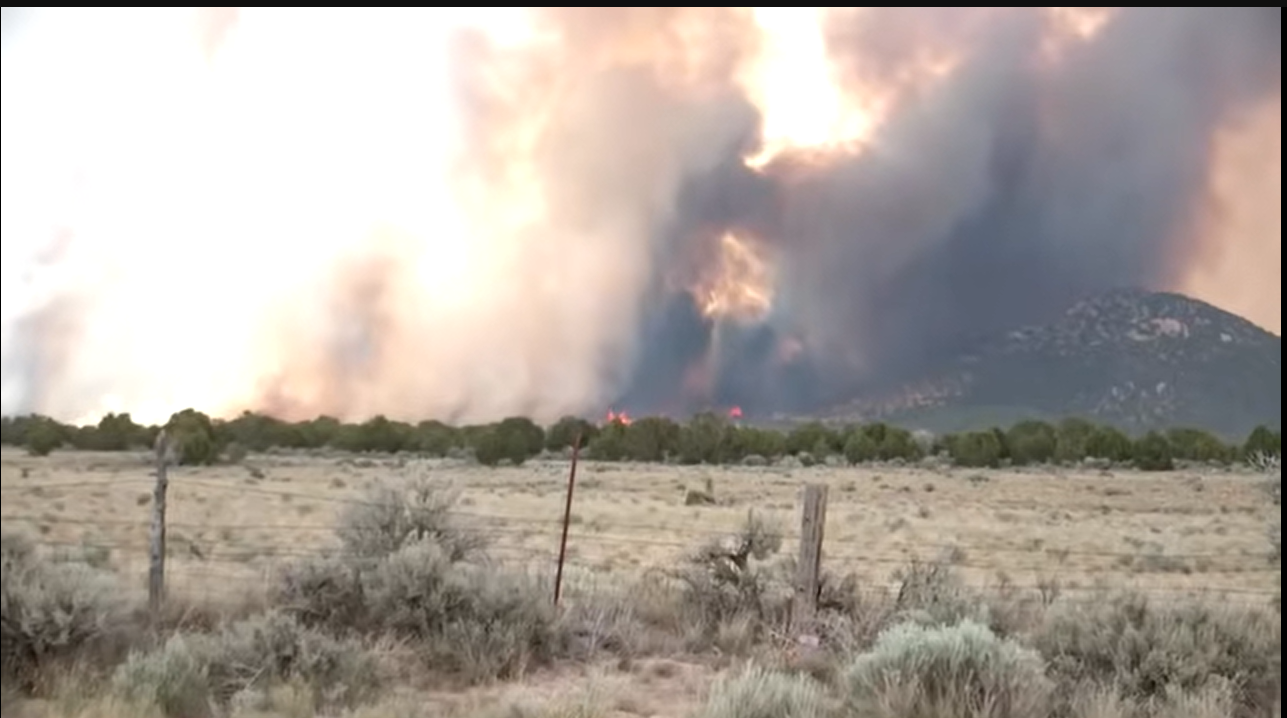
The Cottonwood Fire in Beaver County exploded to over 10,000 acres overnight with 0% containment
A fast-moving wildfire in Utah’s Beaver County tripled in size overnight, burning more than 10,000 acres by Tuesday morning with zero percent containment. The Cottonwood Fire ignited around 3:36 p.m. on Monday and spread with alarming speed, driven by drought conditions and wind gusts reaching up to 50 mph, according to Utah Fire Info.
Mandatory evacuations were ordered just after 9 p.m. Monday for residents in the Eagle Point and Merchant Valley areas of Beaver County as flames bore down on populated areas. A highway in the mountainous region was also completely shut down as crews scrambled to respond. The cause of the fire remains under investigation.
Entire communities forced to flee
The rapid growth of the blaze left little time for residents to prepare. Homes and campgrounds in the affected areas were included in the evacuation orders, with authorities urging people to leave immediately as conditions deteriorated through the night.
The Cottonwood Fire is far from the only active threat in the state. It is one of 342 wildfires currently burning across Utah, which together have consumed more than 64,000 acres combined.
The Iron Fire is Utah’s largest active blaze
While the Cottonwood Fire has drawn urgent attention, the largest active wildfire in Utah is the Iron Fire, burning in Juab County roughly 28 miles southwest of Provo. As of Tuesday morning, the Iron Fire had scorched 31,304 acres and stood at just 9% containment.
Firefighters battling the Iron Fire are bracing for another brutal day. Al Nash, public information officer for the Great Basin Team 3, the federal agency overseeing the incident, said crews are preparing for hot, dry and windy conditions with humidity expected to drop into the single digits. The town of Eureka, which has a population of just over 600, has been completely evacuated. The fire has spread across Juab and two additional counties, crossing onto federal land and forcing highway closures.
Kelly Wicken, a spokesperson for the Utah Division of Forestry, confirmed the Iron Fire originated on private land before spreading well beyond its origin point.
Red flag warnings cover large stretches of the West
Before the fires intensified, the National Weather Service had already issued red flag fire danger warnings across a large portion of Utah. Those warnings remain in effect across southern Utah and extend through much of western and central Colorado. Strong winds and dangerously low humidity are creating conditions that can allow new fires to ignite and spread within minutes, while making existing fires nearly impossible to control.
The situation is part of a broader and deeply concerning wildfire season across the American West. Widespread drought has primed landscapes across multiple states for rapid fire spread, and fire officials have warned that the combination of extreme heat, dry fuel and gusty winds could make this one of the most difficult fire years on record.
Source: ABC News / AOL