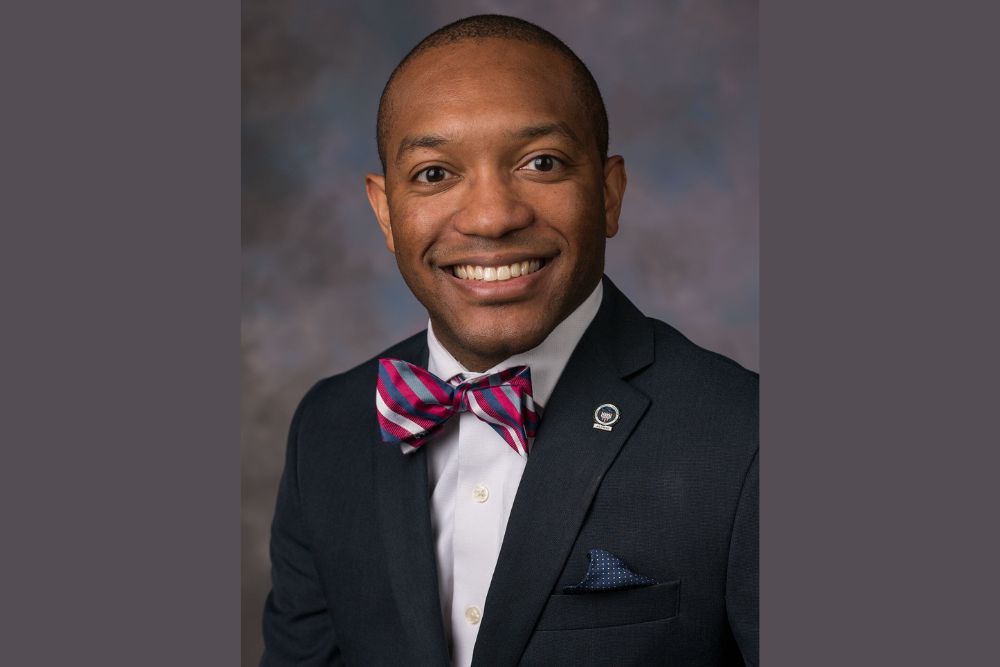
Dr. O.N. Ray Bignall II does not just treat pediatric kidney disease. He tracks every barrier standing between a Black child and the care that child deserves. As Chief Health Equity Officer at Nationwide Children’s Hospital and an Associate Professor of Pediatrics at The Ohio State University College of Medicine, he has spent his career naming those barriers out loud and building systems to dismantle them. In a conversation with Rolling Out Health IQ, he spoke directly to Black families about organ donation myths, the weight of a zip code, and what a diagnosis actually means for a child.
The myth that is shrinking the organ donor pool
One of the most consequential barriers Dr. Bignall encounters is a piece of misinformation that has circulated in Black communities for years. The belief that indicating organ donor status on a driver’s license means emergency medical staff will work less aggressively to save your life in an accident is, in his words, entirely false.
“When our community disproportionately opts out of organ donation, it decreases the pool of available organs for members of our own community who need them, including children and babies,” he said.
The consequences of this myth are measurable. Blood type distribution compounds the problem further. There is a predominance of blood type B among people of Sub-Saharan African and some Asian ancestral backgrounds, yet that predominance does not exist in the general organ donor pool. That mismatch makes it significantly harder for Black and brown children to find a blood match when they need a transplant.
Even after a successful transplant, the challenges do not end. Black and brown children face significantly higher rates of rejection than their counterparts, driven by a combination of immunologic, socioeconomic, and still unexplained factors that persist even when controlling for insurance status.
What your zip code is doing to your child’s kidneys
Dr. Bignall is equally direct about the role geography plays in pediatric kidney health. The legacy of residential segregation and redlining has left concentrated health disadvantages in inner cities and rural communities that show up in the bodies of children decades later.
“Do families have access to clean air, clean water, healthy foods, and an economic and educational structure that supports their children?” he asked. “Because of the very real history of residential segregation and redlining and the impacts we still see nearly a century later, children who live in certain zip codes can have adverse health outcomes.”
He points to families driving three or four hours from rural Appalachian Ohio to access pediatric specialty care as an example of what access barriers look like in practice. A healthcare system designed around reliable transportation, flexible work schedules, and two-parent households delivers a fundamentally different experience to families who do not have those resources. That difference shows up in outcomes.
What Dr. Bignall wants Black parents to hear right now
For Black parents navigating a child’s kidney diagnosis, Dr. Bignall leads with reassurance before he leads with medicine.
“The first thing I would tell them is, this is not their fault,” he said. “Pediatric kidney disease is not the fault of any parent.”
From there, his guidance is clear and practical. See a nephrologist. Sit with a specialist who can explain the diagnosis in plain language. Do not be afraid of a name for the problem. A diagnosis, he argues, is not a label. It is a tool.
“A diagnosis gives voice to a problem that exists that we cannot address if we cannot name,” he said.
He also urges parents to bring everything they find, online research, community knowledge, their own parental instinct, into the room with their child’s care team. That kind of engaged, collaborative approach to treatment is not a disruption to good medicine. It is part of what good medicine looks like.
“Ask questions, bring what you find online, and engage,” he said. “These are the ways we inform one another and keep our children healthy.”