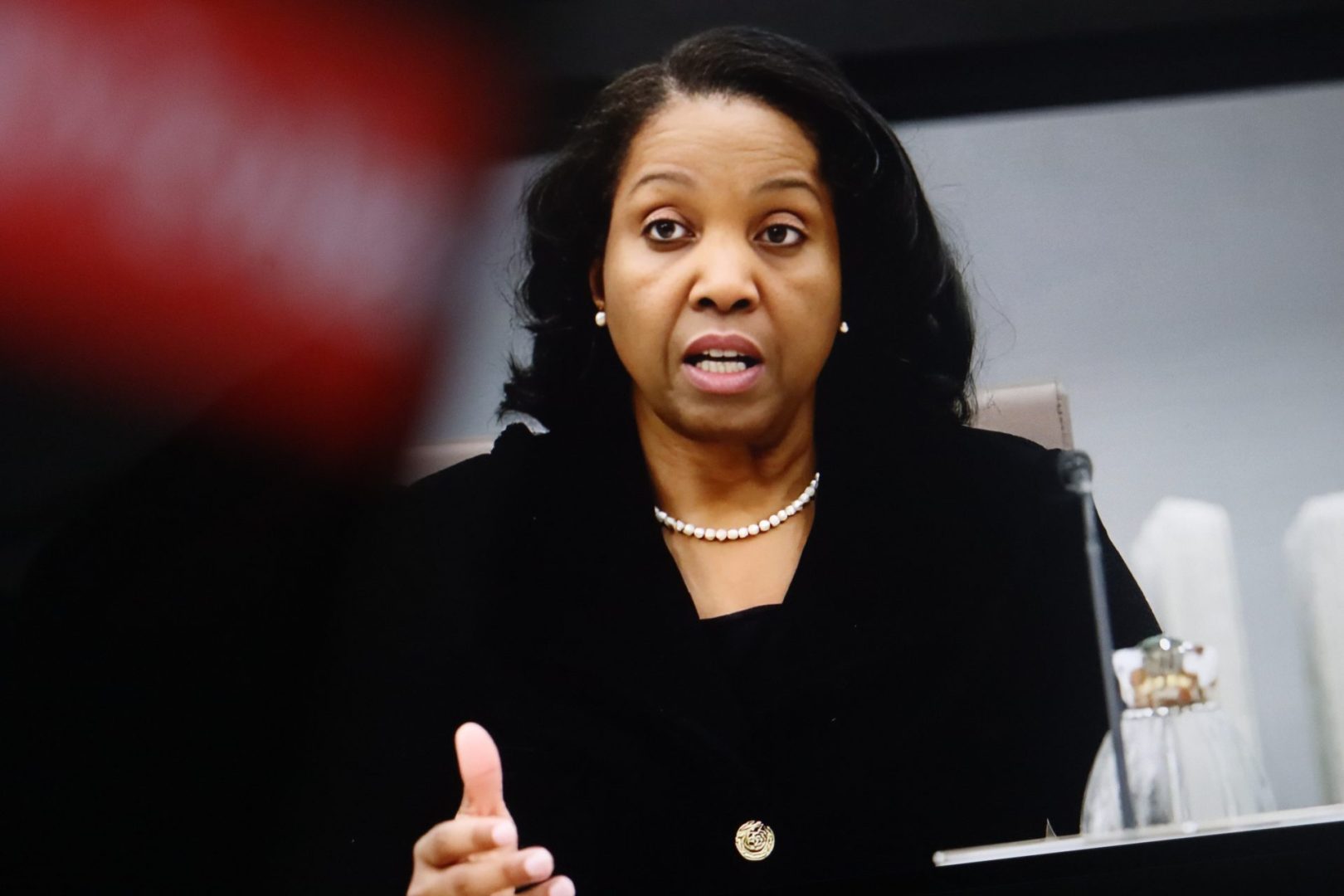
Federal Reserve Governor Lisa Cook has spent more than $1.3 million in legal and security expenses fighting President Donald Trump’s attempt to remove her from the Fed’s board of governors — and the Supreme Court has not yet ruled on whether that firing was legal. The figures emerged Thursday from Cook’s annual financial disclosure filed with the U.S. Office of Government Ethics, offering a detailed picture of what it costs to defend an independent federal institution from presidential pressure.
Cook’s filing listed nearly $1.2 million in legal services payments, with $696,346 coming from the State Democracy Defenders Fund and $477,951 from Contina Impact, two nonprofit organizations that funded her legal defense. Contina Impact also paid approximately $144,000 in security services on Cook’s behalf. Three personal friends contributed additional smaller amounts toward her security expenses. Federal ethics regulations permit outside payments in cases like Cook’s, where expenses were incurred in the course of official duties.
Why Lisa Cook needed security in addition to lawyers
The security costs are not incidental. Following Trump’s public accusations against Cook, her home address was publicized, creating a situation that those familiar with her circumstances described as requiring protective measures. The accusations came from Bill Pulte, director of the Federal Housing Finance Agency, who alleged on social media that Cook had committed mortgage fraud by listing a second home as her primary residence to secure a better mortgage rate. Cook denied the allegations, describing them as a deliberate mischaracterization used to justify her removal for political reasons.
Cook was appointed by President Biden in 2022, becoming the first Black woman to serve on the Federal Open Market Committee, the 12-member body that sets interest rates eight times a year. Her term runs through 2038. Trump fired her from that role in August, and a federal court temporarily reinstated her while the legal challenge worked its way through the system. The case is now before the Supreme Court, with a ruling expected before the end of June.
What the Supreme Court ruling will decide
The stakes extend well beyond Cook’s individual situation. The outcome of her case will determine how much independence the Federal Reserve retains from the White House. Congress created the Fed in 1913 with structural protections designed to insulate monetary policy from political interference, including long terms for appointed officials and funding independent of Congress. Economists broadly agree that an independent central bank is essential to maintaining a stable economy.
Trump has made no secret of his frustration with the Fed’s reluctance to cut interest rates. He has publicly criticized the institution and its leadership repeatedly throughout his second term. During the Supreme Court’s January hearing on Cook’s case, justices appeared skeptical of the manner in which she was fired, though the full court has yet to issue its decision.
The broader pressure on the Federal Reserve
Cook’s case is not the only front on which the Fed has faced pressure during Trump’s second term. The Department of Justice previously opened an investigation into Fed Chair Jerome Powell over cost overruns at the central bank’s headquarters. Powell argued the inquiry amounted to punishment for not cutting interest rates. That investigation has since effectively ended, with the matter transferred to the Fed’s internal inspector general.
The resolution of the Powell investigation cleared the path for the Senate to confirm Kevin Warsh as the new Fed chair. Warsh has aligned himself more closely with the administration’s positions, though he still holds only one of 12 votes on the Fed board. Following the board’s most recent meeting Wednesday, members signaled a possible interest rate increase before the end of the year, a move likely aimed at addressing rising inflation tied to the ongoing Iran war.
Cook remains on the Fed board pending the Supreme Court’s ruling. However the court decides, the case has already demonstrated that challenging the independence of a federal institution comes with real personal costs for the individuals willing to stand in the way.