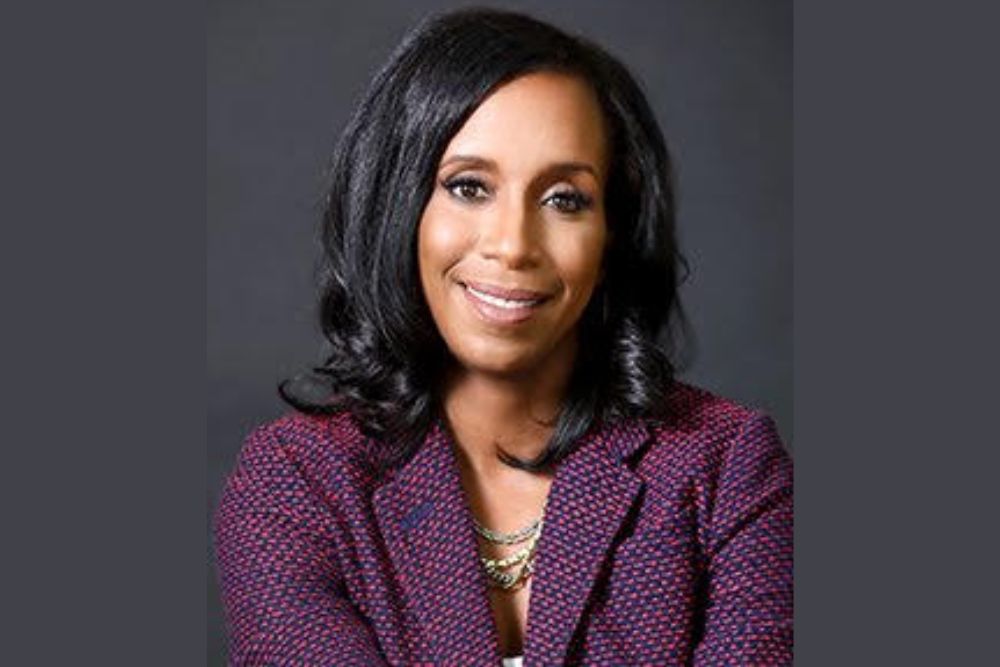
The award-winning fraud expert on AI scams, senior vulnerability, and the one rule every family need
Dr. Kelly Richmond Pope has spent her career turning one of the most uncomfortable topics in finance into something people can understand and act on. As a nationally recognized fraud expert, SEC-qualified financial expert, accounting professor at DePaul University, and founder of the edtech platform Red Flag Mania, she has built a body of work that stretches from the boardroom to the barbershop. Her award-winning documentary All the Queen’s Horses, now streaming on Amazon Prime, examined the largest municipal fraud in United States history. Her book Fool Me Once, published by Harvard Business Review Press and named one of Inc. magazine’s best business books of 2023, pulls back the curtain on the trillion-dollar fraud industry. Pope sat down with Rolling Out to talk about what fraud reveals about human nature, why seniors are being targeted, and what families can do right now.
What is the biggest misconception people have about fraud victims?
The biggest misconception is that people think fraud victims are gullible or maybe just a little silly. It can happen to anyone, and it does. The idea that a victim has a certain profile is a huge misconception.
Fool Me Once goes deep into the psychology behind why people get deceived. What was the most surprising thing you discovered?
The most surprising thing was how frequently we trust anybody. In today’s world, we are so trusting. I don’t know if that has anything to do with social media and how we feel like we know people when we actually don’t. What really shocked me is how trusting we are with the most precious information we have. Your name, your birthdate, your address, your age. We are still a little protective over our social security number, but those other variables we freely give out. And it didn’t matter whether you were an executive or a first-year hire. We almost all have the same level of trust with strangers.
What does fraud reveal about human nature that most people never consider?
Once we give that level of trust up, fraud really just is like a virus that spreads. Trust is the bacteria, and then it spreads like a really bad virus. What people don’t realize is how deep you can get into it very quickly. You don’t always recover from it. You don’t always get back your losses. People also think there is a section of law enforcement that is going to come and retrieve all their money and everything is going to be back to normal pretty quickly. That is also a misconception.
AI cloning is now being used to impersonate grandchildren in distress. What is the single most effective defense a senior can put in place tonight?
The best line of defense for seniors and really all people is to not quiet down that inner voice. If you knew that your grandchild was overseas studying abroad and knew they were eight hours ahead and asleep, the likelihood of them calling you is probably rare. Use the information that you have and don’t quiet down your inner voice, because all of the things we would normally think are red flags are going to be confirmed by AI. You have to go off of the personal information within you that would not be publicly available. We often trust strangers before we trust ourselves, but you have to listen to that inner voice. If someone calls you out of the blue and asks for money, a credit card, or a service you did not ask for, just stop, pause, and think. Call someone else and do some due diligence on your own.
Romance and investment scams use AI chatbots to build trust over weeks. What are the earliest warning signs a senior or their family should recognize?
Before we get into the technology, let us pay attention to the human behavior. If you can sense loneliness or depression, if you know that your senior is alone most of the day and does not get out of the house much, those are signs there could be a level of isolation that makes them more likely to be victimized. If you know that your senior is a very trusting person and is seeking community, pay attention to them, because they may be more prone to being victimized.
How is AI changing fraud and what should families be most worried about right now?
AI makes fraud really easy to do and scalable quickly. The tools are so, so good. But there always seems to be just a little red flag. If you look at a picture and pay attention, maybe one eye is green and one eye is brown. You have to study things really closely. Pay close attention and slow down. You just have to keep asking yourself, do I need it, did I ask for it, and are they asking for money immediately?
If a senior has just sent money to a scammer, what are the first three calls they need to make?
Depending on the amount, my first calls might be my bank or credit card provider, because I want to freeze and stop that from happening. If we are talking about $10,000, start with your bank to stop the transaction and then alert law enforcement. My third call would be to someone in my family, a child, a cousin, or a caregiver, because you might need an accountability partner. Seniors can be great targets because they are often isolated, have a level of pride that makes them unable to share a mistake, and often have more money than someone in their late 20s.
Is loneliness becoming one of the biggest fraud risk factors for older adults?
I think loneliness could be a big risk factor that we do not talk about enough. As we age, our communities become smaller. As kids go off and a spouse may pass on, your life becomes smaller. That smallness is what allows us to need community and warmth. It is easy now to open your phone and be connected to people you are never physically or correctly emotionally connected to. It is the need to feel loved, listened to, liked. Those are all the things the scammer offers us that we are in need of, and I think that stems from loneliness.
For pastors, barbers, and beauticians, what are the warning signs that someone is being actively scammed?
Listen for a senior saying they met someone online who is wonderful, they have never met them in person, and they have asked for money. If there is a big age gap with a new friend, pay attention. If they live abroad, stay alert. Scammers might not ask for money immediately, but anybody who is younger, lives abroad, and eventually asks for money, pay attention. If the person constantly has a crisis, there is always a sick family member, there is always something urgent, pay attention to that. Urgency placed upon a senior can feel very stressful. We owe a duty to our seniors to do something when we hear it.
If you could give every family one fraud prevention rule to live by, what would it be?
Operate off of a budget, because that is going to keep you safe. Anything that pushes up against your monthly budget, talk to someone. My second piece of advice is to find a confidant, an accountability partner, someone you trust that you can share your financial secrets with. You have to find that person in your life, and that is going to keep you and your money safe.
Tell us about Fool Me Once and how can people get it?
Fool Me Once was published on March 21st, 2023, by Harvard Business Review Press. It is broken into three sections covering perpetrators, victims, and whistleblowers. I am of the belief that not all perpetrators are made the same. I talk about the intentional perpetrator, the accidental perpetrator, and the righteous perpetrator. You can find it on Amazon or the Harvard Business Review website. It is not an accounting textbook. It is a story-driven, character-driven book that came from my documentary All the Queen’s Horses, which is on Amazon Prime. That documentary is about a woman who embezzled $53.7 million from the city of Dixon, and that story became the foundation for writing the book.
To learn more about Dr. Kelly Richmond Pope, her book Fool Me Once, her documentary All the Queen’s Horses, and her speaking engagements, visit www.kellyrichmondpope.com.