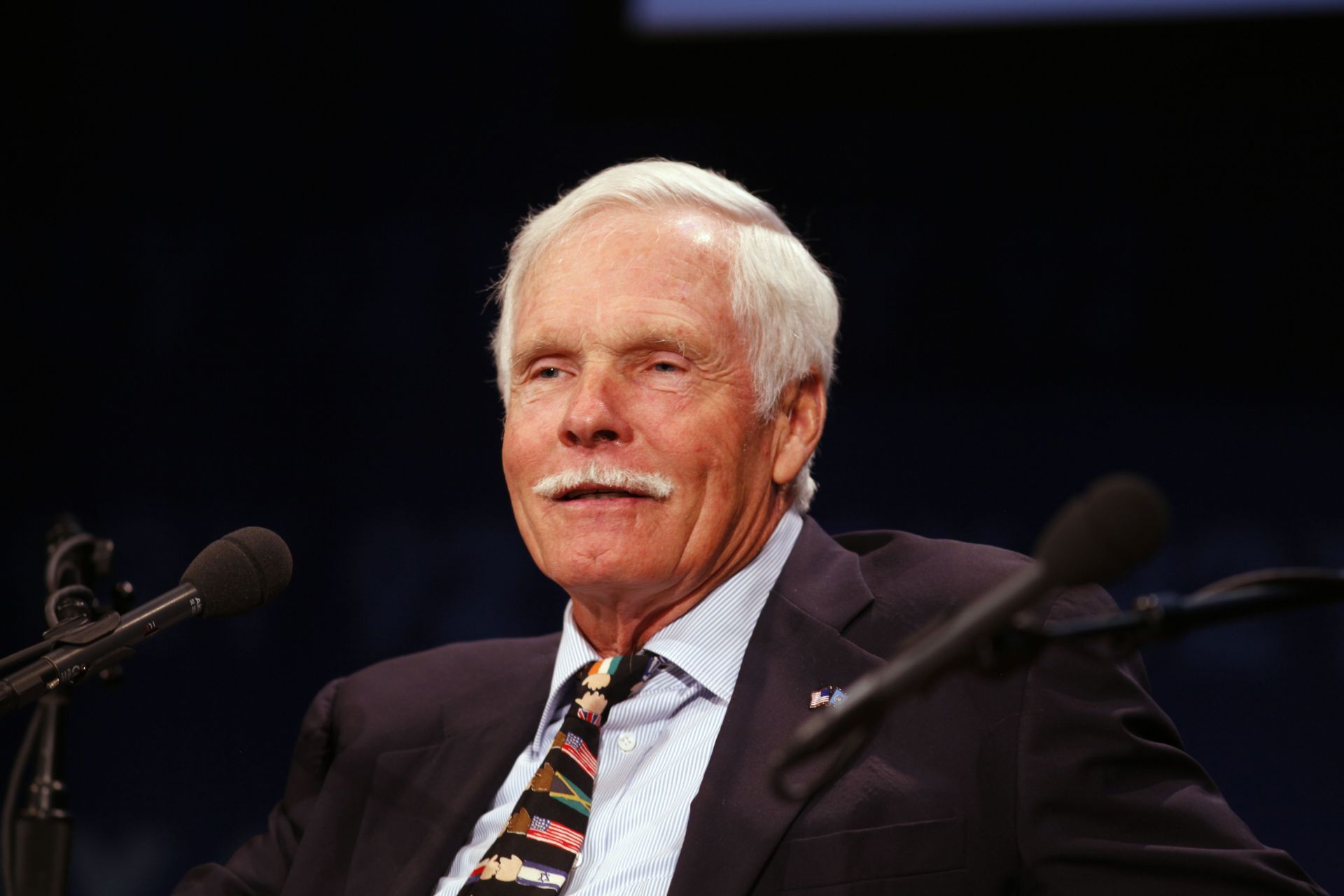

Ted Turner was one of the most unconventional billionaires America has ever produced. He built his wealth not by inheritance or an expensive degree, but with a struggling company that he brought back to life. His name is permanently attached to CNN, but the story of how he built it to become one of the most prestigious channels, is a story worth telling. Here’s how he acquired a successful company and where his wealth came from.
When Ted Turner’s father died in 1963, the 24-year-old ignored advice to sell the business and instead grabbed the wheel of Turner Outdoor Advertising. He expanded it aggressively, rebranded it, and used the cash flow it generated to make his first serious move into television. In 1970, he purchased a financially struggling UHF station in Atlanta for a fraction of what a healthy station would have cost. He loaded the schedule with cheap reruns, old movies, and sports, and within a few years had turned it into one of the most profitable independent stations in the South.
Then came the stroke of genius that changed everything. In 1976, Turner began transmitting the station’s signal via satellite directly to cable providers across the country, effectively creating the first national cable “superstation.” The station was eventually renamed WTBS. Suddenly, a local Atlanta channel was reaching households in every time zone and that reach gave Turner enormous leverage to sell advertising at scale, and revenue followed.
The birth of CNN and how it made Ted Turner a billionaire
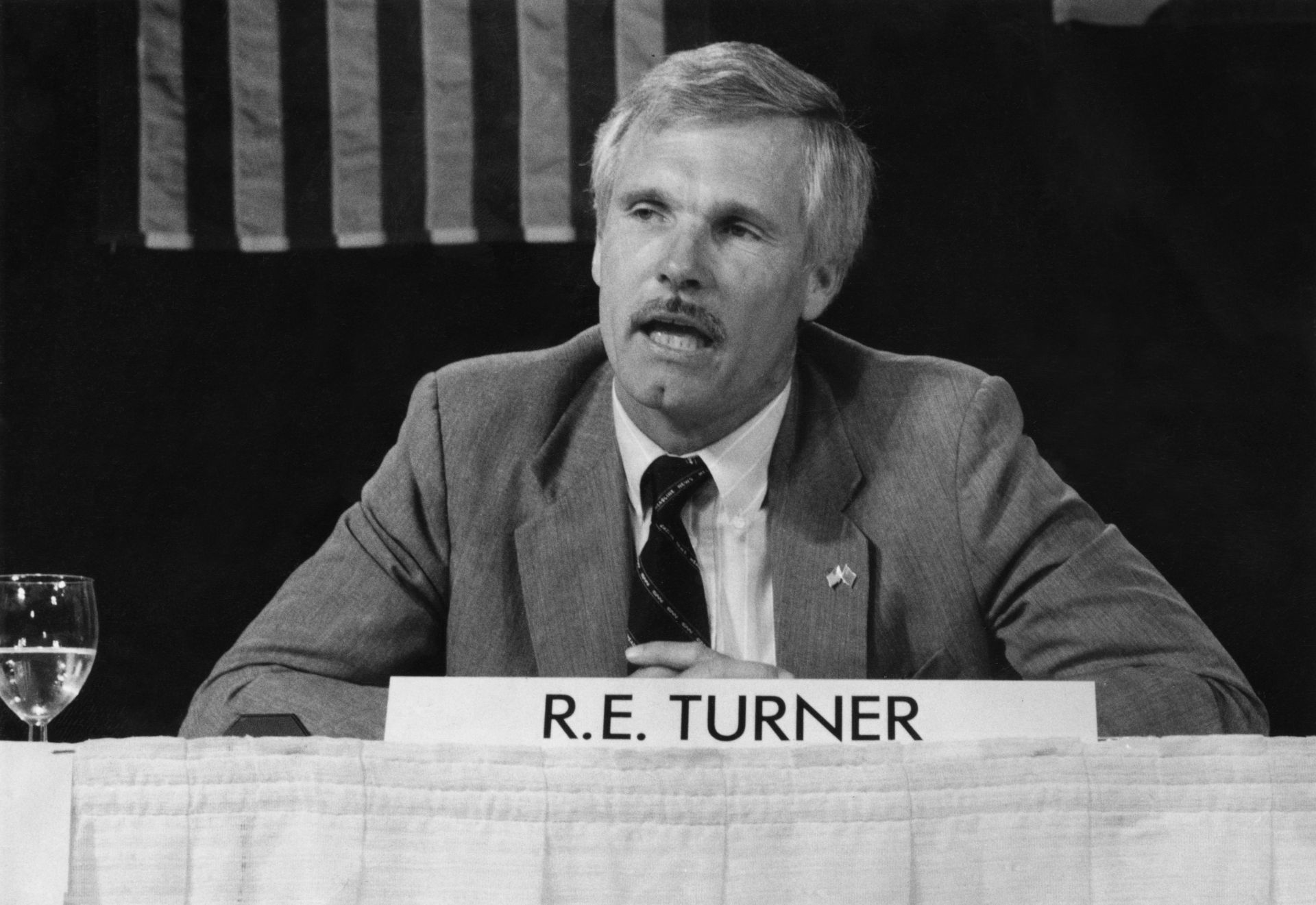
The move that made Ted Turner legendary, though, was CNN. He sank $21 million into the venture and launched the Cable News Network on June 1, 1980, out of an old mansion in Atlanta. Then the 1982 Lebanon War happened, then the 1986 Challenger disaster, then the Gulf War in 1990, which CNN covered live in a way no other outlet could match. By the time the dust settled, CNN had rewired the global understanding of what television news could be, and Turner was a billionaire.
He didn’t stop. In 1988 he launched TNT, filling it partly with the library of over 2,200 MGM films he had purchased in a highly leveraged, widely criticized acquisition earlier in the decade. The film library turned out to be worth far more than anyone had predicted. Cartoon Network launched in 1992, Turner Classic Movies followed in 1994, and by the mid-1990s his Turner Broadcasting System was a constellation of some of the most-watched cable channels in America. At his peak, his net worth surpassed $10 billion.
In 1996, Time Warner acquired Turner Broadcasting System for roughly $7.5 billion in stock. He became vice-chairman and stayed involved, but he was no longer the boss. When Time Warner merged with AOL in 2000, Ted Turner supported it. The merger later became one of the most catastrophic corporate combinations in American history. The AOL-Time Warner entity sustained a $99 billion loss and Turner personally lost somewhere around $8 billion as Time Warner’s stock collapsed. He later chose to resign as vice-chairman in 2003 and eventually stepped away from the board entirely.
After the financial wreckage cleared, he still held assets worth billions. His land holdings alone were extraordinary: roughly two million acres spread across multiple states, making him the second-largest private landowner in the United States. He managed the largest privately owned bison herd in the world and co-founded Ted’s Montana Grill in 2002, a restaurant chain built around bison dishes.
Ted Turner had an illustrious career, one that made him one of the most wealthiest people in the world. What he leaves behind, is a few million dollars, and a legendary legacy that will be forever celebrated.
Edited by Nibir Konwar